AI Coding Tools

Explore the best AI Coding Tools — independent reviews, comparisons, pricing and step-by-step how-to guides, curated by Aizhi.

  • Robotics

    Robotics

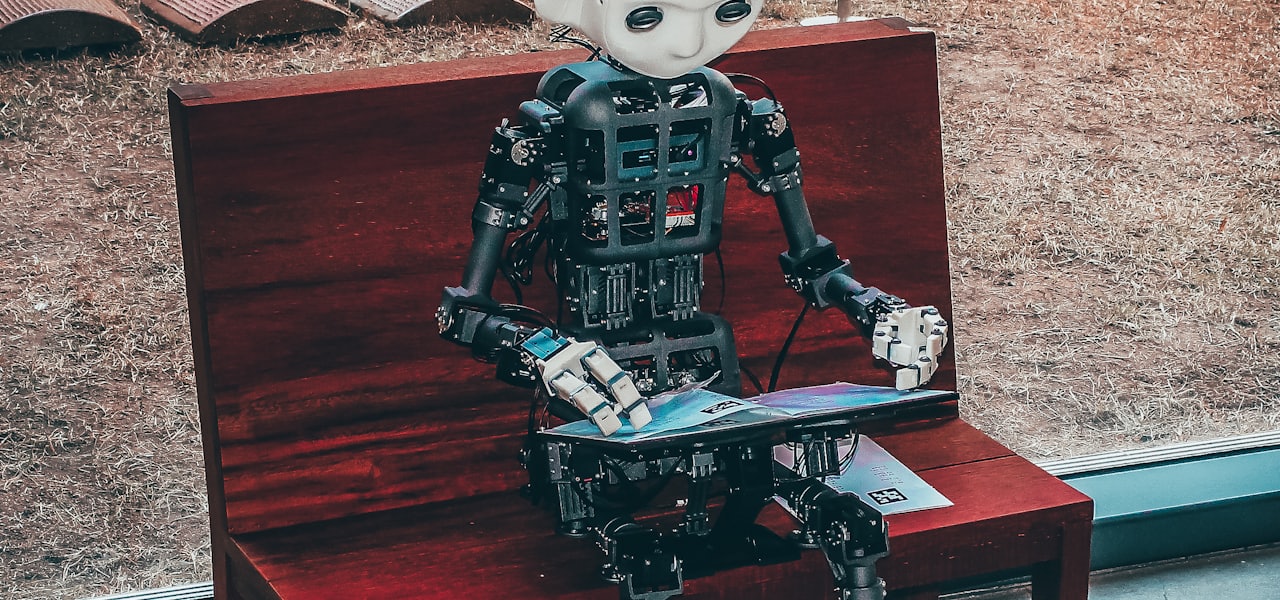
    Robotics is the interdisciplinary study and practice of the design, construction, operation, and use of robots. A roboticist is someone who specializes in robotics. Robotics usually combines four aspects of design work: a power source (e.g. a battery), mechanical construction, a control system (electrical circuits), and software (run by remote control or artificial intelligence). The goal of most robotics is to design machines that can assist humans in various fields, such as agriculture, construction, domestic work, food processing, inventory management, manufacturing, medicine, military, mining, space exploration, and transportation. Robots impact humans by displacing workers. Some expect this to occur at an increasing rate, leading to proposed solutions such as basic income. Robotics is itself a lucrative business that creates careers, especially for postgraduates. Roboticists often aim to create machines that seem to interface naturally with humans. The field is under active research and development, with areas of interest including robot kinematics and quantum robotics. == Design == Robotics usually combines four aspects of design work to create a robot: Power source: Potential energy sources include wired electricity, a battery, and/or petrol. Mechanical construction: A physical form or combination of forms is designed to functionally achieve tasks within a given range of environments. This can include locomotive elements such as wheels and caterpillar tracks, as well as hydraulic limbs and manipulators (e.g. hands). Control system: Electrical circuits (utilizing components such as diodes and transistors) are used to run software, govern motor movement, and read sensors. Software: A program is how a robot decides when or how to do something. Robotic programs can be run by remote control, artificial intelligence (AI), or a hybrid of the two. AI programming is an important part of robotic navigation and human–robot interaction. === Power source === Many different types of batteries can be used as a power source. Most are lead–acid batteries, which are safe and have relatively long shelf lives but are rather heavy compared to silver–cadmium batteries, which are much smaller in volume and much more expensive. Designing a battery-powered robot needs to take into account factors such as safety, cycle lifetime, and weight. Generators, often some type of internal combustion engine, can also be used, but are often mechanically complex and inefficient. Additionally, a tether could connect the robot to a power supply, saving weight and space, but requiring a cumbersome cable. Potential power sources include: Flywheel energy storage Hydraulics Nuclear Organic garbage (through anaerobic digestion) Pneumatics (compressed gases) Solar power === Mechanical construction === Actuators are the "muscles" of a robot, the parts which convert stored energy into movement. The most popular actuators are electric motors that rotate a wheel or gear and linear actuators that control factory robots. Most robots use electric motors—often brushed and brushless DC motors in portable robots or AC motors in industrial robots and computer numerical control machines—especially in systems with lighter loads and where the predominant form of motion is rotational. Meanwhile, linear actuators move in and out and often have quicker direction changes, particularly when large forces are needed, such as with industrial robotics. They are typically powered by oil or compressed air, but can also be powered by electricity, usually via a motor and a leadscrew. The mechanical rack and pinion is common. Recent alternatives to DC motors are piezoelectric motors, including ultrasonic motors, in which tiny piezoceramic elements vibrate many thousands of times per second, causing linear or rotary motion. One type uses the vibration of the piezo elements to step the motor in a circle or a straight line; another type uses the piezo elements to vibrate a nut or drive a screw. The advantages of these motors are nanometer resolution, speed, and force for their size. Series elastic actuation (SEA) relies on introducing intentional elasticity between the motor actuator and the load for robust force control. Due to the resultant lower reflected inertia, series elastic actuation improves safety during robot interactions or collisions. Further, it provides energy efficiency and shock absorption (mechanical filtering) while reducing excessive wear on the transmission and other components. This approach has successfully been employed in various robots, particularly advanced manufacturing robots and walking humanoid robots. The controller design of a series elastic actuator is most often performed within the passivity framework as it ensures the safety of interaction with unstructured environments. However, this framework suffers from stringent limitations imposed on the controller, which may impact performance. Pneumatic artificial muscles, also known as air muscles, are special tubes that expand (typically up to 42%) when air is forced inside them; they are used in some robot applications. Muscle wire, also known as shape memory alloy, is a material that contracts (under 5%) when electricity is applied; they have been used for some small robots. Electroactive polymers are a plastic material that can contract substantially (up to 380% activation strain) from electricity and have been used in the facial muscles and arms of humanoid robots, as well as to enable new robots to float, fly, swim or walk. Additionally, elastic carbon nanotubes are a promising experimental artificial muscle technology. The absence of defects in carbon nanotubes enables these filaments to deform elastically by several percent, with energy storage levels of perhaps 10 J/cm3 for metal nanotubes. Human biceps could be replaced with wire of this material measuring 8 millimetres (3⁄8 in) in diameter, feasibly allowing future robots to outperform humans. ==== Locomotion ==== Robots with only one or two wheel(s) can have advantages such as greater efficiency, reduced parts, and navigation through confined areas. A one-wheeled robot balances on a round ball; Carnegie Mellon University's Ballbot is the approximate height and width of a person. Several attempts have also been made to build spherical robots (also known as orb bots or ball bots), which move by spinning a weight inside the ball or rotating outer shells. Two-wheeled balancing robots generally use a gyroscope to detect how much a robot is falling and drive the wheels proportionally up to hundreds of times per second to counterbalance the fall, based on inverted pendulum dynamics. NASA's Robonaut has been mounted to a Segway for a similar effect. Most mobile robots have four wheels or continuous tracks. Six wheels can give better traction in outdoor terrain, while tracks provide even more grip. Tracked wheels are common for outdoor off-road robots, but are difficult to use indoors. A small number of skating robots have been developed, one of which is a multimodal walking and skating device with four legs and unpowered wheels. Several robots have been made that can walk on two legs, but not yet as reliably as a human. Many other robots have been built that walk on more than two legs, being significantly easier. Walking robots could be used for uneven terrains, providing a high degree of mobility and efficiency, but two-legged robots can currently only handle flat floors or perhaps stairs. Some approaches have included: The zero moment point (ZMP) is the algorithm used by robots such as Honda's ASIMO. The robot's onboard computer tries to keep the total inertial forces (the combination of Earth's gravity and the acceleration and deceleration of walking) exactly opposed by the floor reaction force (the force of the floor pushing back on the robot's foot). In this way, the two forces cancel out, leaving no moment (force causing the robot to rotate and fall over). Human observers note that this is not exactly how a human walks, with some describing ASIMO's walk as looking like it needs use the bathroom. ASIMO's walking algorithm utilizes some dynamic balancing, but requires a flat surface. Several robots, built in the 1980s by Marc Raibert at the MIT Leg Laboratory, successfully demonstrated very dynamic walking. Initially, a robot with only one leg, and a very small foot could stay upright simply by hopping. The movement is the same as that of a person on a pogo stick. As the robot falls to one side, it would jump slightly in that direction to catch itself. Soon, the algorithm was generalized to two and four legs. A bipedal robot was demonstrated running and even performing somersaults. A quadruped was also demonstrated which could trot, run, pace, and bound. A more advanced approach is a dynamic balancing algorithm, which constantly monitors the robot's motion and places the feet to maintain stability. This technique has been demonstrated by Anybots' Dexter robot (

    Read more →
  • Mojito (framework)

    Mojito (framework)

    Mojito is an environment agnostic, Model-View-Controller (MVC) web application framework. It was designed by Yahoo. == Features == Mojito supports agile development of web applications. Mojito has built-in support for unit testing, Internationalization, syntax and coding convention checks. Both server and client components are written in JavaScript. Mojito allows developers designing web applications to leverage the utilities of both configuration and MVC framework. Mojito is capable of running on both JavaScript-enabled web browsers and servers using Node.js because they both utilize JavaScript. Mojito applications mainly consist of two components: JSON Configuration files: these define relationships between code components, assets, routing paths, and framework defaults and are available at the application and mojit level. Directories: these reflect MVC architecture and are used to separate resources such as assets, libraries, middleware, etc. == Architecture == In Mojito, both server and "client" side scripting is done in JavaScript, allowing it to run on both client and server thereby breaking the "front-end back-end barrier." It has both client and server runtimes. === Server runtime === This block houses operations needed by server side components. Services include: Routing rules, HTTP Server, config loader and disk-based loader. === Client runtime === This block houses operations called upon while running client sides components. Services include local storage/cache access and JSON based /URL based loader === Core === Core function can be accessed on client or server. Services include Registry, Dispatcher, Front controller, Resource store. === Container === mojit object comes into the picture. This container also include the services used by mojits. API and Mojito services are the blocks which caters to services needed for execution of mojits. === API (Action Context) === Mojito services are a customizable service block. It offers mojits a range of services which might be needed by mojit to carry out certain actions. These services can be availed at both client and server side. Reusable services can be created and aggregated to the core here. == Mojits == Mojits are the modules of a Mojito application. An application consists of one or more mojits. A mojit encompasses a Model, Views and a Controller defined by JSON configuration files. It includes a View factory where views are created according to the model and a View cache that holds frequently requested views to aid performance. === Application Architecture === A Mojito application is a set of mojits facilitated by configurable JSON files which define the code for model, view and controller. This MVC structure works with API block and Mojito services, and can be deployed at both client and server side. While the application is deployed at client side, it can call server-side modules using binders. Binders are mojit codes that let mojits request services from each other. Mojit Proxy acts as an intermediary between binders and mojit's API (application context) block and other mojits. Controllers are command-issuing units of mojits. Models mirror the core logic and hold data. Applications can have multiple models. They can be centrally accessed from controllers. View files are created in accordance with controllers and models, and are marked-up before they are sent to users as output. === Application Directory Structure === Directory structure of a Mojito application with one mojit: [mojito_app]/ |-- application.json |-- assets/ | `-- favicon.icon |-- yui_modules/ | `-- .{affinity}.js |-- index.js |-- mojits/ | `-- [mojit_name | |-- assets/ | |-- yui_modules/ | | `-- .{affinity}.js | |-- binders/ | | `-- {view_name}.js | |-- controller.{affinity}.js | |-- defaults.json | |-- definition.json | |-- lang/ | | `-- {mojit_name}_{lang}.js | |-- models/ | | `-- {model_name}.{affinity}.js | |-- tests/ | | |-- yui_modules/ | | | `-- {module_name}.{affinity}-tests.js | | |-- controller.{affinity}-tests.js | | `-- models/ | | `-- {model_name}.{affinity}-tests.js | `-- views/ | |-- {view_name}.{view_engine}.html | `-- {view_name}.{device}.{view_engine}.html |-- package.json |-- routes.json (deprecated) |-- server.js == Model, View and Controller == The Model hosts data, which is accessed by the Controller and presented to the View. Controller also handles any client requests for data, in which case controller fetches data from the model and passes the data to the client. All three components are clustered in the mojit. Mojits are physically illustrated by directory structures and an application can have multiple mojits. Every mojit can have one controller, one or more views and zero or more models. === Model === The model it represents the application data and is independent of view or controller. Model contains code to manipulate the data. They are found in the models directory of each mojit. Functions include: Storing information for access by controller. Validation and error handling. Metadata required by the view === Controller === The controller acts like a connecting agent between model and view. It supplies input to Model and after fetching data from model, passes it to View. Functions include Redirection Monitors authentication Web safety Encoding === View === The view acts as a presentation filter by highlighting some model attributes and suppressing others. A view can be understood as a visual permutation of the model. The view renders data received from controller and displays it to the end user.

    Read more →
  • Magisto

    Magisto

    Magisto provided an online video editing tool (both as a web application and a mobile app) for automated video editing and production. In 2019, the company was acquired by Vimeo for an estimated US$200 million. The Magisto app contained a library of music. The music, largely by independent artists, was sorted by mood and is licensed for in-app use. Magisto had a freemium business model where users can create basic video clips for free. In addition, advanced business, professional and personal service tiers are available via various subscription plans, unlocking more features; such as longer videos, HD, premium themes, customization, and control features. == History == Magisto was founded in 2009 as SightEra (LTD) by Oren Boiman (CEO) and Alex Rav-Acha (CTO). Boiman, frustrated with the amount of time it took editing together videos of his daughter, wanted an easier to use application to capture and share videos. Boiman, a computer scientist that graduated from Tel Aviv University, followed with graduate work in computer vision at the Weizmann Institute of Science. Boiman developed several patent-pending image analysis technologies that analyze unedited videos to identify the most interesting parts. The system recognized faces, animals, landscapes, action sequences, movements and other important content within the video, as well as analyzing speech and audio. These scenes are then edited together, along with music and effects. Magisto was launched publicly on September 20, 2011, as a video editing software web application through which users could upload unedited video footage, choose a title and soundtrack and have their video edited for them automatically. On the following day, Magisto was added to YouTube Create's collection of video production applications. The Magisto iPhone app was launched publicly at the 2012 International Consumer Electronics Show (CES) in Las Vegas. At CES, the company was also awarded first place in the 2012 CES Mobile App Showdown. In August 2012, Magisto launched the Android app on Google Play. In September 2012, Magisto launched a Google Chrome App and announced Google Drive integration. In March 2013, Magisto claimed it had 5 million users. Google listed Magisto as an "Editors’ Choice" on its list of "Best Apps of 2013". In September 2013, the company claimed that 10 million users had downloaded the App. In February 2014, Magisto claimed that they had 20 million users, with 2 million new users per month. The company also confirmed investment from Mail.Ru. In September 2014, Magisto rolled out a feature called 'Instagram Ready' which allowed users to upload 15 second clips that are automatically formatted for Instagram. In the same month, Magisto launched a feature for iOS and Android users, called 'Surprise Me', which created video from still photography on users’ smartphones. In October 2014, Magisto was placed 9th on the 2014 Deloitte Israel Technology Fast 50 list and named as a finalist in the Red Herring's Top 100 Europe award. In July 2015, Magisto released an editing theme dedicated to Jerry Garcia. In April 2019, the company was acquired by Vimeo, the IAC-owned platform for hosting, sharing and monetizing streamed video, for an estimated $200 million. === Financing === In 2011, the company received more than $5.5 million in a Series B venture round funding from Magma Venture Partners and Horizons Ventures. In September 2011, at the same time as the public launch of their web application, Magisto announced a $5.5 million Series B funding round led by Li Ka-shing’s Horizons Ventures. Li Ka-Shing is known for making early-stage investments in companies like Facebook, Spotify, SecondMarket and Siri. In October 2013, the company received $13 million in funding from Qualcomm and Sandisk. In 2014, the company received $2 million in Venture Funding from Magma Venture Partners, Qualcomm Ventures, Horizons Ventures and the Mail.Ru Group. == Awards == Magisto won first place at Technonomy3, an annual Internet Technology start-up competition in Israel. Judges of the competition included Jeff Pulver, TechCrunch editor Mike Butcher, investor Yaron Samid, Bessemer Venture Partners Israel partner Adam Fisher and Brad McCarty of The Next Web. Magisto won first place at CES 2012 Mobile app competition, during the launch of Magisto iOS mobile app. Magisto was awarded twice the Google Play Editor's Choice and was part of iPhone App Store Best App awards for 2013 and 2014, and Wired Essential iPad Apps. Magisto was declared by Deloitte as the 7th fastest growing company in Europe, the Middle East, and Africa in 2016.

    Read more →
  • ShowDocument

    ShowDocument

    ShowDocument is an online web application that allows multiple users to conduct web meetings, upload, share and review documents from remote locations. The service was developed by the HBR Labs company, established in 2007. == Features == Users can collaborate on and review documents in real time, with annotations and text being visible to all users and accessible for co-editing. The idea of every user being able to annotate can cause conflicts within the sessions, and so main navigation options are under the "presenter"'s control - which can be given to a different user as well. An earlier version of the application, by contrast, had allowed all users to navigate and edit at once, causing the system to drop all incomplete edits. It is possible to draw and write on a virtual whiteboard, and to stream a YouTube video to a group in full synchronization. A feature also exists for co-browsing of Google Maps. Entering an open session in the application can be done with a given code number, or by receiving a link through an Email message. Different file formats can be uploaded and saved either online or offline, such as PDF. A PDF file's text cannot be edited - text is edited through the separate text editor. Although the platform contains a text chat, it is not intended to replace instant messaging software, as there are no extensive messaging features. The application has a paid and free version, with the free version having a few limitations: audio and video options are disabled, number of participants is limited and sessions are time-limited. == Development == ShowDocument was first developed in 2007. On September 8, 2009, HBR labs released a new update which included features such as secure online document storage and mobile device support.

    Read more →
  • MyRadar

    MyRadar

    MyRadar is a free weather forecasting application developed by Andy Green and his Orlando, Florida-based company ACME AtronOmatic (ACME). The app began operations in 2008 and ran on government-provided weather and radar data for its first decade. In 2019, ACME launched personal satellites to improve predictions of ongoing weather. The app received funding to improve its radar and imaging from the Federal Communications Commission (FCC), National Oceanic and Atmospheric Administration (NOAA), and the Office of Naval Research (ONR). ACME created a weather data satellite constellation named "Hyperspectral Orbital Remote Imaging Spectrometer" (HORIS), which utilizes machine learning and artificial intelligence (AI) to create a current weather map. With the introduction of additional features, including the detection of wildfires and illegal fishing, the app has more broadly become an environmental intelligence app since 2022. In 2024, the app partnered with the Total Traffic and Weather Network (TTWN) to provide traffic flow and incident data for users with paying subscriptions via CarPlay and Android Auto. == History == The app's creator, Andy Green, had created internet tech since the 1980s. His first major project was the development of a public access internet service company based in Rhode Island, which he later sold to finance the creation of ACME AtronOmatic ("ACME" for short), based in Orlando, Florida. The first major app created by ACME was called "Flightwise", which provided users with flight tracking information. In summer 2008, Green had the idea to use the animated location tracker already built-in to Flightwise to make a stand-alone weather forecasting app after wondering if a meal he was eating outdoors would get rained out. MyRadar was launched in 2012 out of an office in Orlando. Despite running solely off of free government-provided weather and radar data for the first decade after launch, Green said the app "took off like wildfire" in downloads. In December 2017, the app partnered with "TripIt" to provide users with information about flight delays and gate changes, eliminating the need for a separate app like Flightwise. In 2019, ACME launched their first personal satellite for the app, a small prototype from New Zealand, as part of an effort to provide detailed imagery and improved predictions of ongoing weather unique to the app. More satellites were eventually launched by ACME to create a weather data satellite constellation named "Hyperspectral Orbital Remote Imaging Spectrometer" (HORIS), monitored by ground stations maintained by Kongsberg Satellite Services. HORIS operates MyRadar by taking the environmental data and imagery it collects and pairing it with machine learning and artificial intelligence (AI) to create a real-time weather map. In 2022, HORIS was expanded upon after ACME won approval from the Federal Communications Commission (FCC) to improve their satellite constellation to include 250 satellites or more. The main batch of satellites were PocketQubes, which entered the atmosphere on May 2, 2022, by Rocket Lab Electron launched from New Zealand, with the additional purpose to test and validate the existing satellites in orbit. In October 2022, ACME received a US$150,000 Small Business Innovation Research (SBIR) grant from the National Oceanic and Atmospheric Administration (NOAA) to improve the app's wildfire detection and air quality measurement technology to better detect smoke, aerosols, fire hotspots using satellites and aerial drones. On August 18, 2023, phase two of the NOAA grant was approved, providing an additional US$650,000 to aid in the app's aforementioned goals by launching a pair of CubeSat satellites to provide high-definition infrared imagery. On September 8, 2023, ACME secured another US$1,200,000 in crowd funding to aid accomplishing the goals of the NOAA grant by expanding the app's workforce from 35 to 100 employees by the end of 2024. In January 2024, MyRadar partnered with Total Traffic and Weather Network (TTWN) to provide traffic data overlaid with its pre-existing weather graphics for users in the United States. The partnership allowed for the app to additionally become a tool for navigation. This officially became a feature days later on January 8, 2024, when the app was made compatible with Apple's CarPlay. On February 7, 2024, the Android equivalent Android Auto also gained the ability to display the app on car interfaces. In March 2024, the app launched a "meteorological wedding planning service" in the United States and Canada for prices between US$1,000 and US$5,000, in which users can request a personal meteorologist to provide an in-person meeting about the best dates for a wedding, and on-call local weather updates the day of. Scheduled for February 2025, four more satellites to help with the NOAA-sponsored wildfire detection are to be launched, and the first by ACME to have AI processing in the satellites themself and not computers on the ground, allowing for quicker transfer of information. == Features and general information == The app's primary function is to provide weather forecasting and prediction to users. The app includes toggleable options to track and send alerts to users for rain, wind patterns, earthquakes, tornadoes, tropical cyclones, wildfires, and more. In early 2020, a feature was added to track orbital objects such as the International Space Station. In May 2022, with the imagery improvement of HORIS, the app gained the secondary abilities to better monitor algae blooms, coral reefs, illegal fishing, and wildfires. In January and February 2024, the ability to display traffic flow and incident data in a feature called "RouteCast" was added, and can be displayed in video and 3D options via CarPlay and Android Auto for users with paying subscriptions. The app also provides annual tropical storm and tornado outlooks for their respective seasons, gathered through satellite and aerial drone data, as well as through on the ground storm chasers.

    Read more →
  • Visual Expert

    Visual Expert

    Visual Expert is a static code analysis tool, extracting design and technical information from software source code by reverse-engineering, used by programmers for software maintenance, modernization or optimization. It is designed to parse several programming languages at the same time (PL/SQL, Transact-SQL, PowerBuilder...) and analyze cross-language dependencies, in addition to each language's source code. Visual Expert checks source code against hundreds of code inspection rules for vulnerability assessment, bug fix, and maintenance issues. == Features == Cross-references exploration: Impact Analysis, E/R diagrams, call graphs, CRUD matrix, dependency graphs. Software documentation: a documentation generator produces technical documentation and low-level design descriptions. Inspect the code to detect bugs, security vulnerabilities and maintainability issues. Native integration with Jenkins. Reports on duplicate code, unused objects and methods and naming conventions. Calculates software metrics and source lines of code. Code comparison: finds differences between several versions of the same code. Performance analysis: identifies code parts that slow down the application because of their syntax - it extracts statistics about code execution from the database and combines it with the static analysis of the code. == Usage == Visual Expert is used in several contexts: Change impact analysis: evaluating the consequences of a change in the code or in a database. Avoiding negative side effects when evolving a system. Static Application Security Testing (SAST): detecting and removing security issues. Continuous Integration / Continuous Inspection : adding a static code analysis job in a CI/CD workflow to automatically verify the quality and security of a new build when it is released. Program comprehension: helping programmers understand and maintain existing code, or modernize legacy systems. Transferring knowledge of the code, from one programmer to another. Software sizing: calculating the size of an application, or a piece of code, in order to estimate development efforts. Code review: improving the code by finding and removing code smells, dead code, code causing poor performances or violations of coding conventions. == Limitations == As a static code analyzer, Visual Expert is limited to the programming languages supported by its code parsers - Oracle PL/SQL, SQL Server Transact-SQL, PowerBuilder. A preliminary reverse engineering is required. Visual Expert does it automatically, but its duration depends on the size of the code parsed. Users must wait for the parsing completion prior to using the features, or schedule it in advance. They must also allocate sufficient hardware resources to support their volume of code. Visual Expert is based on a client/server architecture: the code analysis is running on a Windows PC - preferably a server. The information extracted from the code is stored in a RDBMS, communicating with a client application installed on the programmer's computer - no web client is available. This requires that the code, the parsers, the RDBMS and the programmers’ computers are connected to the same LAN or VPN. == History == 1995- 1998 - Prog and Doc - Initial version distributed on the French market 2001 - Visual Expert 4.5 2003 - Visual Expert 5 2007 - Visual Expert 5.7 2010 - Visual Expert 6.0 2015 - Visual Expert 2015 - Server component added to schedule code analyses 2016 - Visual Expert 2016 - Oracle PL/SQL code parser, code inventory (lines of code, number of objects…) 2017 - Visual Expert 2017 - SQL Server T-SQL code parser, Code comparison, CRUD matrix 2018 - Visual Expert 2018 - DB Code Performance Analysis, integration with TFS 2019 - Visual Expert 2019 - Generation of E/R diagrams from the code 2020 - Visual Expert 2020 - Object dependency matrix, naming consistency verification, integration with GIT and SVN 2021 - Visual Expert 2021 - Continuous Code Inspection, integration with Jenkins 2022 - Visual Expert 2022 - Support for cloud-based repositories and large volumes of code 2023 - Visual Expert 2023 - Performance tuning for PowerBuilder 2024 - Visual Expert 2024 - New web UI to simplify deployment and use among large teams. 2025 - Visual Expert 2025 - AI-based features to explain code, generate comments, and optimize queries

    Read more →
  • Software design

    Software design

    Software design is the process of conceptualizing how a software system will work before it is implemented or modified. Software design also refers to the direct result of the design process – the concepts of how the software will work which may be formally documented or may be maintained less formally, including via oral tradition. The design process enables a designer to model aspects of a software system before it exists with the intent of making the effort of writing the code more efficiently. Creativity, past experience, a sense of what makes "good" software, and a commitment to quality are success factors for a competent design. A software design can be compared to an architected plan for a house. High-level plans represent the totality of the house (e.g., a three-dimensional rendering of the house). Lower-level plans provide guidance for constructing each detail (e.g., the plumbing lay). Similarly, the software design model provides a variety of views of the proposed software solution. == Part of the overall process == In terms of the waterfall development process, software design is the activity that occurs after requirements analysis and before coding. Requirements analysis determines what the system needs to do without determining how it will do it, and thus, multiple designs can be imagined that satisfy the requirements. The design can be created while coding, without a plan or requirements analysis, but for more complex projects this is less feasible. Completing a design prior to coding allows for multidisciplinary designers and subject-matter experts to collaborate with programmers to produce software that is useful and technically sound. Sometimes, a simulation or prototype is created to model the system in an effort to determine a valid and good design. == Code as design == A common point of confusion with the term design in software is that the process applies at multiple levels of abstraction such as a high-level software architecture and lower-level components, functions and algorithms. A relatively formal process may occur at high levels of abstraction but at lower levels, the design process is almost always less formal where the only artifact of design may be the code itself. To the extent that this is true, software design refers to the design of the design. Edsger W. Dijkstra referred to this layering of semantic levels as the "radical novelty" of computer programming, and Donald Knuth used his experience writing TeX to describe the futility of attempting to design a program prior to implementing it: TEX would have been a complete failure if I had merely specified it and not participated fully in its initial implementation. The process of implementation constantly led me to unanticipated questions and to new insights about how the original specifications could be improved. == Artifacts == A design process may include the production of art Software design documentation such as flow chart, use case, Pseudocode, Unified Modeling Language model and other Fundamental modeling concepts. For user centered software, design may involve user experience design yielding a storyboard to help determine those specifications. Documentation may be reviewed to allow constraints, specifications and even requirements to be adjusted prior to coding. == Iterative design == Software systems inherently deal with uncertainties, and the size of software components can significantly influence a system's outcomes, both positively and negatively. Neal Ford and Mark Richards propose an iterative approach to address the challenge of identifying and right-sizing components. This method emphasizes continuous refinement as teams develop a more nuanced understanding of system behavior and requirements. The approach typically involves a cycle with several stages: A high-level partitioning strategy is established, often categorized as technical or domain-based. Guidelines for the smallest meaningful deployable unit, referred to as "quanta," are defined. While these foundational decisions are made early, they may be revisited later in the cycle if necessary. Initial components are identified based on the established strategy. Requirements are assigned to the identified components. The roles and responsibilities of each component are analyzed to ensure clarity and minimize overlap. Architectural characteristics, such as scalability, fault tolerance, and maintainability, are evaluated. Components may be restructured based on feedback from development teams. This cycle serves as a general framework and can be adapted to different domains. == Design principles == Design principles enable a software engineer to navigate the design process. Davis suggested principles which have been refined over time as: The design process should not suffer from "tunnel vision" A good designer should consider alternative approaches, judging each based on the requirements of the problem, the resources available to do the job. The design should be traceable to the analysis model Because a single element of the design model can often be traced back to multiple requirements, it is necessary to have a means for tracking how requirements have been satisfied by the design model. The design should not reinvent the wheel Systems are constructed using a set of design patterns, many of which have likely been encountered before. These patterns should always be chosen as an alternative to reinvention. Time is short and resources are limited; design time should be invested in representing (truly new) ideas by integrating patterns that already exist (when applicable). The design should "minimize the intellectual distance" between the software and the problem as it exists in the real world That is, the structure of the software design should, whenever possible, mimic the structure of the problem domain. The design should exhibit uniformity and integration A design is uniform if it appears fully coherent. In order to achieve this outcome, rules of style and format should be defined for a design team before design work begins. A design is integrated if care is taken in defining interfaces between design components. The design should be structured to accommodate change The design concepts discussed in the next section enable a design to achieve this principle. The design should be structured to degrade gently, even when aberrant data, events, or operating conditions are encountered Well-designed software should never "bomb"; it should be designed to accommodate unusual circumstances, and if it must terminate processing, it should do so in a graceful manner. Design is not coding, coding is not design Even when detailed procedural designs are created for program components, the level of abstraction of the design model is higher than the source code. The only design decisions made at the coding level should address the small implementation details that enable the procedural design to be coded. The design should be assessed for quality as it is being created, not after the fact A variety of design concepts and design measures are available to assist the designer in assessing quality throughout the development process. The design should be reviewed to minimize conceptual (semantic) errors There is sometimes a tendency to focus on minutiae when the design is reviewed, missing the forest for the trees. A design team should ensure that major conceptual elements of the design (omissions, ambiguity, inconsistency) have been addressed before worrying about the syntax of the design model. == Design concepts == Design concepts provide a designer with a foundation from which more sophisticated methods can be applied. Design concepts include: Abstraction Reducing the information content of a concept or an observable phenomenon, typically to retain only information that is relevant for a particular purpose. It is an act of Representing essential features without including the background details or explanations. Architecture The overall structure of the software and the ways in which that structure provides conceptual integrity for a system. Good software architecture will yield a good return on investment with respect to the desired outcome of the project, e.g. in terms of performance, quality, schedule and cost. Control hierarchy A program structure that represents the organization of a program component and implies a hierarchy of control. Data structure Representing the logical relationship between elements of data. Design pattern A designer may identify a design aspect of the system that has solved in the past. The reuse of such patterns can increase software development velocity. Information hiding Modules should be specified and designed so that information contained within a module is inaccessible to other modules that have no need for such information. Modularity Dividing the solution into parts (modules). Refinement The process of elaboration. A hierarchy is developed by decomposing a macrosco

    Read more →
  • Flutter (software)

    Flutter (software)

    Flutter is an open-source UI software development kit created by Google. It can be used to develop cross platform applications from a single codebase for the web, Fuchsia, Android, iOS, Linux, macOS, and Windows. First described in 2015, Flutter was released in May 2017. Flutter is used internally by Google in apps such as Google Pay and Google Earth as well as by other software developers including ByteDance and Alibaba. Flutter ships applications with its own rendering engine which directly outputs pixel data to the screen. This is in contrast to many other UI frameworks that rely on the target platform to provide a rendering engine, such as native Android apps which rely on the device-level Android SDK or iOS SDK which use the target platform's built-in UI stack. Flutter's control of its rendering pipeline simplifies multi-platform support as identical UI code can be used for all target platforms.One of Flutter’s key features is hot reload, which allows developers to see code changes instantly without restarting the application. == Architecture == The basic component in a Flutter program is a "widget", which can in turn consist of other widgets. A widget describes the logic, interaction, and design of a UI element with an implementation similar to React. Unlike other cross-platform toolkits such as React Native and Xamarin which draw widgets using native platform components, Flutter renders widgets itself on a per-pixel basis. Flutter has two types of widgets: stateless and stateful. Stateless widgets only update if their inputs change, meaning they otherwise won't need to be rebuilt when other elements of the screen change, while stateful widgets can call the setState() method to update an internal state and redraw. Although widgets are the primary method of constructing Flutter applications, they can also be bypassed in favor of directly drawing on a canvas. This feature has been occasionally used to implement game engines in Flutter. The Flutter framework contains two sets of widgets that conform to specific design languages: Material Design widgets implement Google's design language of the same name, and Cupertino widgets implement Apple's iOS Human interface guidelines. Flutter allows the developer to use either set of widgets on either platform. Developers can use Cupertino widgets on Android. Flutter apps are written in the Dart language. Release versions of Flutter apps on all platforms use ahead-of-time (AOT) compilation except for on the Web where code is transpiled to JavaScript or WebAssembly. Flutter inherits Dart's Pub package manager and software repository, which allows users to publish and use custom packages as well as Flutter-specific plugins. The Foundation library, written in Dart, provides basic classes and functions that are used to construct applications using Flutter, such as APIs to communicate with the engine. Flutter's engine, written primarily in C++, provides low-level rendering support using either Google's Skia graphics library or the custom "Impeller" graphics layer, which is enabled by default on iOS and Android API 29 and higher. The engine interfaces with platform-specific SDKs such as those provided by Android and iOS to implement features like accessibility, file and network I/O, native plugin support, etc. == History == The first version of Flutter was known as "Sky" and ran on the Android operating system. It was unveiled at the 2015 Dart developer summit with the stated intent of being able to render consistently at 120 frames per second. On December 4, 2018, Flutter 1.0 was released at the Flutter conference in London. On May 6, 2020, the Dart software development kit (SDK) version 2.8 and Flutter 1.17.0 were released, adding support for the Metal API. On March 3, 2021, Google released Flutter 2 during an online Flutter Engage event. It added a Canvas-based renderer for web in addition to the HTML-based renderer and early-access desktop application support for Windows, macOS, and Linux. It also shipped with Dart 2.0 which included support for null-safety. Null safety was initially optional as it was a breaking change and was made mandatory in Dart 3 released in 2023. On May 12, 2022, Flutter 3 and Dart 2.17 were released with support for all desktop platforms as stable. On October 27, 2024, a number of Flutter community developers announced Flock, a fork of Flutter intended to be easier to contribute to while still keeping in sync with all changes made in the upstream code base. In 2025, Google continued Flutter's evolution with enhanced modular architecture, foldable device support, and ARM IoT optimizations as outlined in the updated roadmap. === Major releases in Flutter === Prior to the Flutter 2.0 release in March of 2021, the Flutter framework was centered on mobile development. The developers of Flutter were primarily focused on the two main platforms, IOS and Android. Specifically, they wanted to deliver strong performance and improve access to native API and platform features and expand the widget system. With the release of Flutter 2.0, the framework moved beyond mobile and introduced support for the web platform. This marked a shift into a broader cross platform development environment. With this release, developers could produce applications for Web, Android and IOS from the same codebase. This release also brought the desktop platform closer to stable. There have been a number of improvements since then that have broadened platform support. They introduced enhancements to performance and workflow, redefined the developer’s toolkit, and added an improved rendering engine. "Flutter 2.10.0 release notes". docs.flutter.dev. Retrieved 2025-11-11.

    Read more →
  • Visual analytics

    Visual analytics

    Visual analytics is a multidisciplinary science and technology field that emerged from information visualization and scientific visualization. It focuses on how analytical reasoning can be facilitated by interactive visual interfaces. == Overview == Visual analytics is "the science of analytical reasoning facilitated by interactive visual interfaces." It can address problems whose size, complexity, and need for closely coupled human and machine analysis may make them otherwise intractable. Visual analytics advances scientific and technological development across multiple domains, including analytical reasoning, human–computer interaction, data transformations, visual representation for computation and analysis, analytic reporting, and the transition of new technologies into practice. As a research agenda, visual analytics brings together several scientific and technical communities from computer science, information visualization, cognitive and perceptual sciences, interactive design, graphic design, and social sciences. Visual analytics integrates new computational and theory-based tools with innovative interactive techniques and visual representations to enable human-information discourse. The design of the tools and techniques is based on cognitive, design, and perceptual principles. This science of analytical reasoning provides the reasoning framework upon which one can build both strategic and tactical visual analytics technologies for threat analysis, prevention, and response. Analytical reasoning is central to the analyst's task of applying human judgments to reach conclusions from a combination of evidence and assumptions. Visual analytics has some overlapping goals and techniques with information visualization and scientific visualization. There is currently no clear consensus on the boundaries between these fields, but broadly speaking the three areas can be distinguished as follows: Scientific visualization deals with data that has a natural geometric structure (e.g., MRI data, wind flows). Information visualization handles abstract data structures such as trees or graphs. Visual analytics is especially concerned with coupling interactive visual representations with underlying analytical processes (e.g., statistical procedures, data mining techniques) such that high-level, complex activities can be effectively performed (e.g., sense making, reasoning, decision making). Visual analytics seeks to marry techniques from information visualization with techniques from computational transformation and analysis of data. Information visualization forms part of the direct interface between user and machine, amplifying human cognitive capabilities in six basic ways: by increasing cognitive resources, such as by using a visual resource to expand human working memory, by reducing search, such as by representing a large amount of data in a small space, by enhancing the recognition of patterns, such as when information is organized in space by its time relationships, by supporting the easy perceptual inference of relationships that are otherwise more difficult to induce, by perceptual monitoring of a large number of potential events, and by providing a manipulable medium that, unlike static diagrams, enables the exploration of a space of parameter values These capabilities of information visualization, combined with computational data analysis, can be applied to analytic reasoning to support the sense-making process. == History == As an interdisciplinary approach, visual analytics has its roots in information visualization, cognitive sciences, and computer science. The term and scope of the field was defined in the early 2000s through researchers such as Jim Thomas, Kristin A. Cook, John Stasko, Pak Chung Wong, Daniel A. Keim and David S. Ebert. As a reaction to the September 11, 2001 attacks the United States Department of Homeland Security was established in late 2002, combining dozens of previously separated government agencies. Building upon earlier work on visual data mining by Daniel A. Keim starting in the late 1990s, this simultaneously lead to the development of a research agenda for visual analytics. As part of these efforts the National Visualization and Analytics Center (NVAC) at Pacific Northwest National Laboratory was established in 2004, whose charter was to develop system to mitigate information overload after the September 11, 2001 attacks in the intelligence community. Their research work determined core challenges, posed open research questions, and positioned visual analytics as a new research domain, in particular through the 2005 research agenda Illuminating the Path. In 2006, the IEEE VIS community led by Pak Chung Wong and Daniel A. Keim launched the annual IEEE Conference on Visual Analytics Science and Technology (VAST), providing a dedicated venue for research into visual analytics, which in 2020 merged to form the IEEE Visualization conference. In 2008, scope and challenges of visual analytics were conceptually defined by Daniel A. Keim and Jim Thomas in their influential book about visual data mining. The domain was further refined as part of the European Commissions FP7 VisMaster program in the late 2000s. == Topics == === Scope === Visual analytics is a multidisciplinary field that includes the following focus areas: Analytical reasoning techniques that enable users to obtain deep insights that directly support assessment, planning, and decision making Data representations and transformations that convert all types of conflicting and dynamic data in ways that support visualization and analysis Techniques to support production, presentation, and dissemination of the results of an analysis to communicate information in the appropriate context to a variety of audiences. Visual representations and interaction techniques that take advantage of the human eye's broad bandwidth pathway into the mind to allow users to see, explore, and understand large amounts of information at once. === Analytical reasoning techniques === Analytical reasoning techniques are the method by which users obtain deep insights that directly support situation assessment, planning, and decision making. Visual analytics must facilitate high-quality human judgment with a limited investment of the analysts’ time. Visual analytics tools must enable diverse analytical tasks such as: Understanding past and present situations quickly, as well as the trends and events that have produced current conditions Identifying possible alternative futures and their warning signs Monitoring current events for emergence of warning signs as well as unexpected events Determining indicators of the intent of an action or an individual Supporting the decision maker in times of crisis. These tasks will be conducted through a combination of individual and collaborative analysis, often under extreme time pressure. Visual analytics must enable hypothesis-based and scenario-based analytical techniques, providing support for the analyst to reason based on the available evidence. === Data representations === Data representations are structured forms suitable for computer-based transformations. These structures must exist in the original data or be derivable from the data themselves. They must retain the information and knowledge content and the related context within the original data to the greatest degree possible. The structures of underlying data representations are generally neither accessible nor intuitive to the user of the visual analytics tool. They are frequently more complex in nature than the original data and are not necessarily smaller in size than the original data. The structures of the data representations may contain hundreds or thousands of dimensions and be unintelligible to a person, but they must be transformable into lower-dimensional representations for visualization and analysis. === Theories of visualization === Theories of visualization include: Jacques Bertin's Semiology of Graphics (1967) Nelson Goodman's Languages of Art (1977) Jock D. Mackinlay's Automated design of optimal visualization (APT) (1986) Leland Wilkinson's Grammar of Graphics (1998) Hadley Wickham's Layered Grammar of Graphics (2010) === Visual representations === Visual representations translate data into a visible form that highlights important features, including commonalities and anomalies. These visual representations make it easy for users to perceive salient aspects of their data quickly. Augmenting the cognitive reasoning process with perceptual reasoning through visual representations permits the analytical reasoning process to become faster and more focused. == Process == The input for the data sets used in the visual analytics process are heterogeneous data sources (i.e., the internet, newspapers, books, scientific experiments, expert systems). From these rich sources, the data sets S = S1, ..., Sm are chosen, whereas each Si , i ∈ (1, ..., m) consists of attrib

    Read more →
  • AlternativeTo

    AlternativeTo

    AlternativeTo is a website which lists alternatives to web-based software, desktop computer software, and mobile apps, and sorts the alternatives by various criteria, including the number of registered users who have "Liked" each of them on AlternativeTo. Users can search the site to find better alternatives to an application they are using or previously have used, including free alternatives such as free web applications (cloud computing) which don't require any installation and can be accessed from any browser. == Differences == Unlike a number of other software directory websites, the software is not arranged into categories, but each individual piece of software has its own list of alternatives. However, users can also search by tag to find software, which offers an alternative way of finding related software. Users can also narrow their search by focusing on particular platforms and license types (such as "free for non-commercial use"). AlternativeTo lists basic information such as platform and license type at the top of each entry, but does not have comparison tables listing software features side by side. AlternativeTo does not host software for download but it provides links to official websites to where you can download or buy them. AlternativeTo allows anyone to register and suggest new alternatives, or to update the information held about existing entries. Suggestions and alterations are reviewed before being made publicly visible. Users can register using either email and password or OpenID. Login with Facebook has been discontinued. As AlternativeTo is itself a web application, it even has a page for alternatives to itself. == Features == Tweets from anyone mentioning particular pieces of software are also pulled in dynamically from Twitter. Each application has an RSS feed for notifying users of newly listed alternatives to that application. After a user has clicked the Like button next to an application, they are offered the opportunity to tell their friends on Facebook or their followers on Twitter that they liked it. The site also has a forum. For software developers, a JSON API used to be available, but has been taken down indefinitely.

    Read more →
  • Toad (software)

    Toad (software)

    Toad is a database management toolset from Quest Software for managing relational and non-relational databases using SQL aimed at database developers, database administrators, and data analysts. The Toad toolset runs against Oracle, SQL Server, IBM DB2 (LUW & z/OS), SAP and MySQL. A Toad product for data preparation supports many data platforms. == History == A practicing Oracle DBA, Jim McDaniel, designed Toad for his own use in the mid-1990s. He called it Tool for Oracle Application Developers, shortened to "TOAD". McDaniel initially distributed the tool as shareware and later online as freeware. Quest Software acquired TOAD in October 1998. Quest Software itself was acquired by Dell in 2012 to form Dell Software. In June 2016, Dell announced the sale of their software division, including the Quest business, to Francisco Partners and Elliott Management Corporation. On October 31, 2016, the sale was finalized. On November 1, 2016, the sale of Dell Software to Francisco Partners and Elliott Management was completed, and the company re-launched as Quest Software. == Features == Connection Manager - Allow users to connect natively to the vendor’s database whether on-premise or DBaaS. Browser - Allow users to browse all the different database/schema objects and their properties effective management. Editor - A way to create and maintain scripts and database code with debugging and integration with source control. Unit Testing (Oracle) - Ensures code is functionally tested before it is released into production. Static code review (Oracle) - Ensures code meets required quality level using a rules-based system. SQL Optimization - Provides developers with a way to tune and optimize SQL statements and database code without relying on a DBA. Advanced optimization enables DBAs to tune SQL effectively in production. Scalability testing and database workload replay - Ensures that database code and SQL will scale properly before it gets released into production. == Books == Toad Pocket Reference for Oracle plsql 1st Edition by Jim McDaniel and Patrick McGrath, O'Reilly, 2002 (ISBN 0596003374, ISBN 978-0-596-00337-1) Toad Pocket Reference for Oracle 2nd Edition by Jeff Smith, Bert Scalzo, and Patrick McGrath, O'Reilly, 2005 (ISBN 0596009712, ISBN 978-0-596-00971-7) TOAD Handbook by Bert Scalzo and Dan Hotka, Sams, 2003 (ISBN 0672324865, ISBN 978-0-672-32486-4) TOAD Handbook 2nd Edition by Bert Scalzo and Dan Hotka, Addison-Wesley Professional, 2009 (ISBN 0321649109, ISBN 978-0-321-64910-2). TOAD Handbook 2nd Edition by Bert Scalzo and Dan Hotka, Addison-Wesley Professional, 2009 (ISBN 0321649109, ISBN 978-0-321-64910-2).

    Read more →
  • List of ARM Cortex-M development tools

    List of ARM Cortex-M development tools

    This is a list of development tools for 32-bit ARM Cortex-M-based microcontrollers, which consists of Cortex-M0, Cortex-M0+, Cortex-M1, Cortex-M3, Cortex-M4, Cortex-M7, Cortex-M23, Cortex-M33, Cortex-M35P, Cortex-M52, Cortex-M55, and Cortex-M85 cores. == Development toolchains == IDE, compiler, linker, debugger, flashing (in alphabetical order): Ac6 System Workbench for STM32 (based on Eclipse and the GNU GCC toolchain with direct support for all ST-provided evaluation boards, Eval, Discovery and Nucleo, debug with ST-LINK) ARM Development Studio 5 by ARM Ltd. Atmel Studio by Atmel (based on Visual Studio and GNU GCC Toolchain) Code Composer Studio by Texas Instruments CoIDE by CooCox (note - website dead since 2018) Crossware Development Suite for ARM by Crossware CrossWorks for ARM by Rowley Dave by Infineon. For XMC processors only. Includes project wizard, detailed register decoding and a code library still under development. DRT by SOMNIUM Technologies. Based on GCC toolchain and proprietary linker technology. Available as a plugin for Atmel Studio and an Eclipse-based IDE. EmBitz (formerly Em::Blocks) – free, fast (non-eclipse) IDE for ST-LINK (live data updates), OpenOCD, including GNU Tools for ARM and project wizards for ST, Atmel, EnergyMicro etc. Embeetle IDE - free, fast (non-eclipse) IDE. Works both on Linux and Windows. emIDE by emide – free Visual Studio Style IDE including GNU Tools for ARM GNU ARM Eclipse – A family of Eclipse CDT extensions and tools for GNU ARM development GNU Tools (aka GCC) for ARM Embedded Processors by ARM Ltd – free GCC for bare metal IAR Embedded Workbench for ARM by IAR Systems ICC by ImageCraft Keil MDK-ARM by Keil LPCXpresso by NXP (formerly Red Suite by Code Red Technologies) MikroC by mikroe – mikroC MULTI by Green Hills Software, for all Arm 7, 9, Cortex-M, Cortex-R, Cortex-A Ride and RKit for ARM by Raisonance SEGGER Embedded Studio for ARM by Segger. SEGGER Ozone by Segger. STM32CubeIDE by STMicroelectronics - Combines STCubeMX with TrueSTUDIO into a single Eclipse style package Sourcery CodeBench by Mentor Graphics TASKING VX-Toolset by Altium TrueSTUDIO by Atollic Visual Studio by Microsoft as IDE, with GNU Tools as compiler/linker – e.g. supported by VisualGDB VXM Design's Buildroot toolchain for Cortex. It integrates GNU toolchain, Nuttx, filesystem and debugger/flasher in one build. winIDEA/winIDEAOpen by iSYSTEM YAGARTO – free GCC (no longer supported) Code::Blocks (EPS edition) (debug with ST-LINK no GDB and no OpenOCD required) IDE for Arduino ARM boards Arduino – IDE for Atmel SAM3X (Arduino Due) Energia – Arduino IDE for Texas Instruments Tiva and CC3200 Notes: == Debugging tools == JTAG and/or SWD debug interface host adapters (in alphabetical order): Black Magic Probe by 1BitSquared. CMSIS-DAP by Mbed. Crossconnect by Rowley Associates. DSTREAM by ARM Holdings Green Hills Probe and SuperTrace Probe by Green Hills Software. iTAG by iSYSTEM. I-jet by IAR Systems. Jaguar by Crossware. J-Link by Segger Supports JTAG and SWD. Supports ARM7, ARM9, ARM11, Cortex-A, Cortex-M, Cortex-R, Renesas RX, Microchip PIC32. Eclipse plug-in available. Supports GDB, RDI, Ozone debuggers. J-Trace by Segger. Supports JTAG, SWD, and ETM trace on Cortex-M. JTAGjet by Signum. LPC-LINK by Embedded Artists (for NXP) This is only embedded on NXP LPCXpresso development boards. LPC-LINK 2 by NXP. This device can be reconfigured to support 3 different protocols: J-LINK by Segger, CMSIS-DAP by ARM, Redlink by Code Red. Multilink debug probes, Cyclone in-system programming/debugging interfaces, and a GDB Server plug-in for Eclipse-based ARM IDEs by PEmicro. OpenOCD open source GDB server supports a variety of JTAG probes OpenOCD Eclipse plug-in available in GNU ARM Eclipse Plug-ins. AK-OPENJTAG by Artekit (Open JTAG-compatible). AK-LINK by Artekit. PEEDI by RONETIX Debug Probe by Raspberry Pi. RLink by Raisonance. ST-LINK/V2 by STMicroelectronics The ST-LINK/V2 debugger embedded on STM32 Nucleo and Discovery development boards can be converted to SEGGER J-LINK protocol. TRACE32 Debugger and ETM/ITM Trace by Lauterbach. ULINK by Keil. Debugging tools and/or debugging plug-ins (in alphabetical order): Memfault Error Analysis for post mortem debugging Percepio Tracealyzer, RTOS trace visualizer (with Eclipse plugin). Segger SystemView, RTOS trace visualizer. == Real-time operating systems == Commonly referred to as RTOS: == C/C++ software libraries == The following are free C/C++ libraries: ARM Cortex libraries: Cortex Microcontroller Software Interface Standard (CMSIS) libopencm3 (formerly called libopenstm32) libmaple for STM32F1 chips LPCOpen for NXP LPC chips Alternate C standard libraries: Bionic libc, dietlibc, EGLIBC, glibc, klibc, musl, Newlib, uClibc FAT file system libraries: EFSL, FatFs, Petit FatFs Fixed-point math libraries: libfixmath, fixedptc, FPMLib Encryption libraries: Comparison of TLS implementations wolfSSL == Non-C/C++ computer languages and software libraries ==

    Read more →
  • Roadie (app)

    Roadie (app)

    Roadie Inc. is an American package delivery company for business and private same-day, urgent and scheduled delivery in the United States. The company was founded in 2014 and launched its web and mobile apps in January 2015. As of September 2021, it reported having over 200,000 drivers covering more than 20,000 zip codes. Roadie states it matches gig drivers with deliveries that are directed along the routes they plan to travel. Major customers include The Home Depot, Walmart, Tractor Supply Company, Best Buy and Delta Air Lines. In September 2021, UPS entered into an agreement to acquire Roadie for an undisclosed amount with the transaction expected to be closed in the fourth quarter. == History == Roadie was founded by Marc Gorlin, a co-founder of Kabbage and founder of VerticalOne and Pretty Good Privacy, as a same-day and urgent delivery company in 2014. In January 2015, Roadie launched the first consumer to consumer (C2C) version of its app with a Series A funding round of $10 million. In February, Roadie announced a partnership with Waffle House to designate its restaurants "Roadie Roadhouses", offering a neutral meeting place for drivers and senders. Drivers receive free food and drink through the partnership. In May, late-night host Jimmy Kimmel discussed the Roadie-Waffle House relationship in an opening monologue on Jimmy Kimmel Live!. Roadie's driver network expanded significantly as a result. Roadie closed a Series B round of funding in June, raising $15 million, and its first business to business (B2B) app version launched that November. In 2015, Delta Air Lines signed an agreement with Roadie to deliver mishandled luggage, becoming Roadie’s first enterprise customer. Roadie launched a pilot program with Delta at Daytona Beach International Airport. Since then, the relationship has expanded to include over 70 airports around the United States and a first mile/last mile line haul relationship with Delta Cargo. In 2017, the company signed a deal with The Home Depot, also based in Atlanta, and in February 2019, closed a Series C round of funding. In October 2019, Roadie and Delta Cargo announced a partnership to create a same-day cross-country delivery offering, DASH Door-to-Door, the first of its kind from a U.S. passenger airline. Tractor Supply Company became the first general merchandise retailer to offer same-day delivery from every store in April 2020 through Roadie. In September 2021, UPS entered an agreement to acquire Roadie for an undisclosed amount. The transaction was expected to close in the fourth quarter of 2021. Roadies, which at the time reported having 200,000 operators serving over 20,000 ZIP Codes, was expected to continue operations under its name as a separate company with no transfer of packages between the UPS and Roadies networks. The relationship between the companies goes back several years with UPS being an early investor. Earlier in 2021, UPS had begun a pilot program testing same-day deliveries via Roadies. == Operations == === On-the-way model === Roadie’s app works by connecting drivers with senders, businesses or consumers who have items that need to be delivered. Deliveries within the app are referred to as "Gigs", which Gorlin said was inspired by live music road crews, also known as roadies. A sender creates a Gig on Roadie's web app or via its API. Drivers then review deliveries in their area on their mobile app and may choose to offer to take on individual or groups of deliveries along the same route. Gigs are then assigned to drivers by Roadie's algorithm. According to the company, this model encourages drivers to choose Gigs that align with their planned schedules and routes. Roadie calls this its "on-the-way" delivery model. The go-to-market approach taken by Roadie also differs from its competitors. Rather than launching in major cities and sequentially adding new markets city-by-city, Roadie launched nationwide from its inception. The company relies on retail and airline partners to drive volume of deliveries in individual markets, which in turn builds up a network of drivers in those areas, making it easier for small businesses and consumers to send deliveries as well. This strategy allows Roadie to reach smaller cities and towns in rural or exurban communities, traditionally difficult markets for delivery providers to serve. === Service lines === Roadie’s platform is most popular for same-day, on-demand or scheduled first mile/last mile delivery, especially delivery from stores and warehouses. Some retailers also use it for returns and reverse logistics, moving inventory, and hot shot shipping. Roadie operates 1-hour grocery delivery for Walmart, and delivers perishable food items for others including small, independent retailers. The on-the-way model complements the grocery industry’s just in time model, making last-mile deliveries that do not break the cold chain. === Cross-country same-day delivery === In October 2019, Roadie and Delta Cargo launched DASH Door-to-Door, a 24/7 door-to-door pick-up and delivery service. Roadie handles the first and last mile and Delta manages the line haul via passenger flights. The service launched originally from Atlanta to 55 cities and is an industry-first for a US commercial airline. === Promotion, awards and corporate citizenship === In September 2015, Roadie announced a partnership with Atlanta-based musician Ludacris, to promote the app. Following the devastation caused by flooding in Baton Rouge in 2016, Roadie offered free pickup and delivery for all deliveries traveling to and from the Baton Rouge area. In December 2020, Walmart named Roadie its top delivery partner for "Highest Driver Customer Satisfaction" and "Highest Net Promoter Score", after expanding into general merchandise deliveries as well as grocery that same year.

    Read more →
  • Scripped

    Scripped

    Scripped was an online screenplay services company offering three services: script writing, script registration, and script coverage. Scripped did not facilitate collaboration among screenwriters. It combined with Zhura in 2010. According to Techcrunch, Scripped had more than 60,000 writers as of March 2010. Scripped was administered by Sunil Rajaraman, Ryan Buckley and Zak Freer. Actor, writer, and director Edward Burns and screenwriter Steven E. de Souza joined Scripped's Board of Advisers in May 2008. In 2008, the company formed a partnership with Write Brothers, makers of Movie Magic Screenwriter software. On March 29, 2010, Scripped announced that it closed $250,000 in private investment and merged with competitor Zhura. Scripped's CEO, Sunil Rajaraman, remains the merged company's Chief Executive Officer. On April 1, 2015, citing a serious technical failure, Scripped shuttered its service. As part of the announcement, it was disclosed that their backup servers had failed as well, losing all of its users' stored scripts. The website URL currently redirects to WriterDuet's website, another online scriptwriting service; Scripped had advertised WriterDuet in Scripped's shutdown open letter. == Features == The Scripped Writer provided a built-in screenplay template which formatted the document to a standard for scripts as recommended by the AMPAS. The screenplay document was composed of seven elements: scene, action, character, dialog, parenthetical, transition and general. Each element had a specific style to which the Scripped Writer conformed as text was entered. Like other client-side screenplay software, Scripped offered Tab-Enter toggling between screenplay elements, making the writing process much faster. Text files could be imported into the Scripped Writer and automatically conformed to the screenplay template. Completed scripts could be exported as PDF files. In May 2011 the administrators of Scripped launched Scripted.com - a sister site focused on freelance writing jobs. Subsequent to the service's launch, the company was renamed to Scripted, Inc.

    Read more →
  • Gerrit (software)

    Gerrit (software)

    Gerrit ( GERR-it) is a free, web-based team code collaboration tool. Software developers in a team can review each other's modifications on their source code using a Web browser and approve or reject those changes. It integrates closely with Git, a distributed version control system. Gerrit is a fork of Rietveld, a code review tool for Subversion. Both are named after Dutch designer Gerrit Rietveld. == History == Originally written in Python like Rietveld, it is now written in Java (Java EE Servlet) with SQL since version 2 and a custom-made Git-based database (NoteDb) since version 3. In versions 2.0–2.16 Gerrit used Google Web Toolkit for its browser-based front-end. After being developed and used in parallel with GWT for versions 2.14–2.16, a new Polymer web UI replaced the GWT UI in version 3.0.

    Read more →