AI Video Tools

Explore the best AI Video Tools — independent reviews, comparisons, pricing and step-by-step how-to guides, curated by Aizhi.

  • Nice (app)

    Nice (app)

    Nice is a photo-sharing mobile app developed by Nice App Mobile Technology Co., Ltd. (Chinese: 北京极赞科技有限公司) in China. The app allows users to tag specific locations on images, enabling detailed labeling of items such as clothing and accessories. The company received a $36 million investment in C-round funding in 2014. Nice had 30 million registered users and 12 million active users as of late 2015. As of January 2024, it remained a popular app, the 6th most-downloaded in the iOS App Store for China. == Official website == Official website

    Read more →
  • Ramification problem

    Ramification problem

    In philosophy and artificial intelligence (especially, knowledge based systems), the ramification problem is concerned with the indirect consequences of an action. It might also be posed as how to represent what happens implicitly due to an action or how to control the secondary and tertiary effects of an action. It is strongly connected to, and is opposite the qualification side of, the frame problem. Limit theory helps in operational usage. For instance, in KBE derivation of a populated design (geometrical objects, etc., similar concerns apply in shape theory), equivalence assumptions allow convergence where potentially large, and perhaps even computationally indeterminate, solution sets are handled deftly. Yet, in a chain of computation, downstream events may very well find some types of results from earlier resolutions of ramification as problematic for their own algorithms.

    Read more →
  • MacSpeech Scribe

    MacSpeech Scribe

    MacSpeech Scribe is speech recognition software for Mac OS X designed specifically for transcription of recorded voice dictation. It runs on Mac OS X 10.6 Snow Leopard. The software transcribes dictation recorded by an individual speaker. Typically, the speaker will record their dictation using a digital recording device such as a handheld digital recorder, mobile smartphone (e.g. iPhone), or desktop or laptop computer with a suitable microphone. MacSpeech Scribe supports specific audio file formats for recorded dictation: .aif, .aiff, .wav, .mp4, .m4a, and .m4v. MacSpeech Scribe was originally developed by MacSpeech, Inc. and released February 11, 2010, at Macworld Expo in San Francisco. The product is now owned by Nuance Communications which acquired MacSpeech on February 16, 2010. Nuance is the developer of other speech recognition products including Dragon NaturallySpeaking for Windows, Dragon Dictate for Mac (formerly "MacSpeech Dictate"), and Dragon Dictation apps for iOS. Jeffery Battersby of Macworld noted in his September 2010 review of MacSpeech Scribe, v1.1: Small foibles aside, MacSpeech Scribe is a powerful and intelligent tool for transcribing your recorded speech. A simple training process and access to a wide variety of standard audio formats mean that you’ll be moving your spoken text to the printed page in a matter of minutes and with a minimum of hassle. Scribe is the best, simplest way for you to get your spoken word to the printed page. == Release history ==

    Read more →
  • Unified Modeling Language

    Unified Modeling Language

    The Unified Modeling Language (UML) is a general-purpose, object-oriented, visual modeling language that provides a way to visualize the architecture and design of a system, similar to the function of a blueprint. UML defines notation for many types of diagrams which focus on aspects such as behavior, interaction, and structure. UML is both a formal metamodel and a collection of graphical templates. The metamodel defines the elements in an object-oriented model such as classes and properties. It is essentially the same thing as the metamodel in object-oriented programming (OOP), however for OOP, the metamodel is primarily used at run time to dynamically inspect and modify an application object model. The UML metamodel provides a mathematical, formal foundation for the graphic views used in the modeling language to describe an emerging system. UML was created in an attempt to define a standard language for object-oriented programming at the OOPSLA '95 Conference. Originally, Grady Booch and James Rumbaugh merged their models into a unified model. This was followed by Booch's company Rational Software purchasing Ivar Jacobson's Objectory company and merging their model into the UML. At the time Rational and Objectory were two of the dominant players in the small world of independent vendors of object-oriented tools and methods. The Object Management Group (OMG) then took ownership of UML. The creation of UML was motivated by the desire to standardize the disparate nature of notational systems and approaches to software design at the time. In 1997, UML was adopted as a standard by the Object Management Group (OMG) and has been managed by this organization ever since. In 2005, UML was also published by the International Organization for Standardization (ISO) and the International Electrotechnical Commission (IEC) as the ISO/IEC 19501 standard. Since then the standard has been periodically revised to cover the latest revision of UML. Most developers do not use UML per se, but instead produce more informal diagrams, often hand-drawn. These diagrams, however, often include elements from UML. == Use == UML is primarily used for software development (in any industry or domain) but also used outside elsewhere including business processes, system functions, database schemas, workflow in the legal systems, medical electronics, Health care systems, and hardware design.. The UML is used by the OMG itself to define other OMG products such as the Unified Architecture Framework (UAF) and the Systems Modelling Language (SysML) v1. UML is designed for use with many object-oriented software development methods, both today and for the methods when it was first developed – including OMT, Booch method, Objectory, and especially RUP, which it was originally intended to be used with when work began at Rational Software. Although originally intended for object-oriented design documentation, UML has been used effectively in other contexts such as modeling business process. As UML is not inherently linked to a particular programming language, it can be used for modeling a system independent of language. Some UML tools generate source code from a UML model. === Elements === UML diagrams support visualizing system aspects like: Use case diagram for specifying user interactions with systems Class diagram for specifying structures, including data structures Activity diagram for specifying business process workflows Component diagram for specifying how components interface with other components Deployment diagram for specifying how components are deployed and executed on computational nodes In addition to syntactical (notational) elements with well-defined semantics, UML diagrams also allow for free-form comments (notes) that explain aspects such as usage, constraints, and intents. === Sharing === UML models can be exchanged among UML tools via the XML Metadata Interchange (XMI) format. === Cardinality notation === As with database Chen, Bachman, and ISO ER diagrams, class models are specified to use "look-across" cardinalities, even though several authors (Merise, Elmasri & Navathe, amongst others) prefer same-side or "look-here" for roles and both minimum and maximum cardinalities. Recent researchers (Feinerer and Dullea et al.) have shown that the "look-across" technique used by UML and ER diagrams is less effective and less coherent when applied to n-ary relationships of order strictly greater than 2. Feinerer says: "Problems arise if we operate under the look-across semantics as used for UML associations. Hartmann investigates this situation and shows how and why different transformations fail.", and: "As we will see on the next few pages, the look-across interpretation introduces several difficulties which prevent the extension of simple mechanisms from binary to n-ary associations." === Artifacts === An artifact is the "specification of a physical piece of information that is used or produced by a software development process, or by deployment and operation of a system" including models, source code, scripts, executables, tables in database systems, development deliverables, a design documents, and email messages. An artifact is the physical entity that is deployed to a node. Other UML elements such as classes and components are first manifest into artifacts and instances of these artifacts are then deployed. Artifacts can be composed of other artifacts. === Metamodeling === The OMG developed a metamodeling architecture to define UML, called the Meta-Object Facility (MOF). MOF is designed as a four-layered architecture, as shown in the image at right. It provides a meta-meta model at the top, called the M3 layer. This M3-model is the language used by Meta-Object Facility to build metamodels, called M2-models. The most prominent example of a Layer 2 Meta-Object Facility model is the UML metamodel, which describes UML itself. These M2-models describe elements of the M1-layer, and thus M1-models. These would be, for example, models written in UML. The last layer is the M0-layer or data layer. It is used to describe runtime instances of the system. The metamodel can be extended using a mechanism called stereotyping. This has been criticized as being insufficient/untenable by Brian Henderson-Sellers and Cesar Gonzalez-Perez in "Uses and Abuses of the Stereotype Mechanism in UML 1.x and 2.0". == Diagrams == UML 2 defines many types of diagrams – shown as a taxonomy in the image. === Structure diagrams === Structure diagrams emphasize the structure of the system – using objects, classifiers, relationships, attributes and operations. They are used to document software architecture. Class diagram – Describes the structure of a class Component diagram – Describes how a software system is split into components and dependencies between the components Composite structure diagram Deployment diagram Object diagram Package diagram Profile diagram === Behavior diagrams === Behavior diagrams emphasize the behavior of a system by showing collaborations among objects and changes to the internal states of objects. They are used to describe the functionality of a system. Activity diagram – Describes the business and operational activities of components State machine diagram Use case diagram – Depicts of a user's interaction with a system === Interaction diagrams === Interaction diagrams, a subset of behavior diagrams, emphasize the flow of control and data between components of a system. Communication diagram – shows communication between components Interaction overview diagram Sequence diagram – shows interactions arranged in time sequence; can be drawn via tools such as Lucidchart and Draw.io Timing diagram – focuses on timing constraints === Examples === == Adoption == In 2013, UML had been marketed by OMG for many contexts, but aimed primarily at software development with limited success. It has been treated, at times, as a design silver bullet, which leads to problems. UML misuse includes overuse (designing every part of the system with it, which is unnecessary) and assuming that novices can design with it. It is considered a large language, with many constructs. Some people (including Jacobson) feel that UML's size hinders learning and therefore uptake. Visual Studio removed support for UML in 2016 due to lack of use. == History == UML has evolved since the second half of the 1990s and has its roots in the object-oriented programming methods developed in the late 1980s and early 1990s. The image shows a timeline of the history of UML and other object-oriented modeling methods and notation. === Origin === Rational Software hired James Rumbaugh from General Electric in 1994 and after that, the company became the source for two of the most popular object-oriented modeling approaches of the day: Rumbaugh's object-modeling technique (OMT) and Grady Booch's method. They were soon assisted in their efforts by Ivar Jacobson, the creator of the object-oriented software engineeri

    Read more →
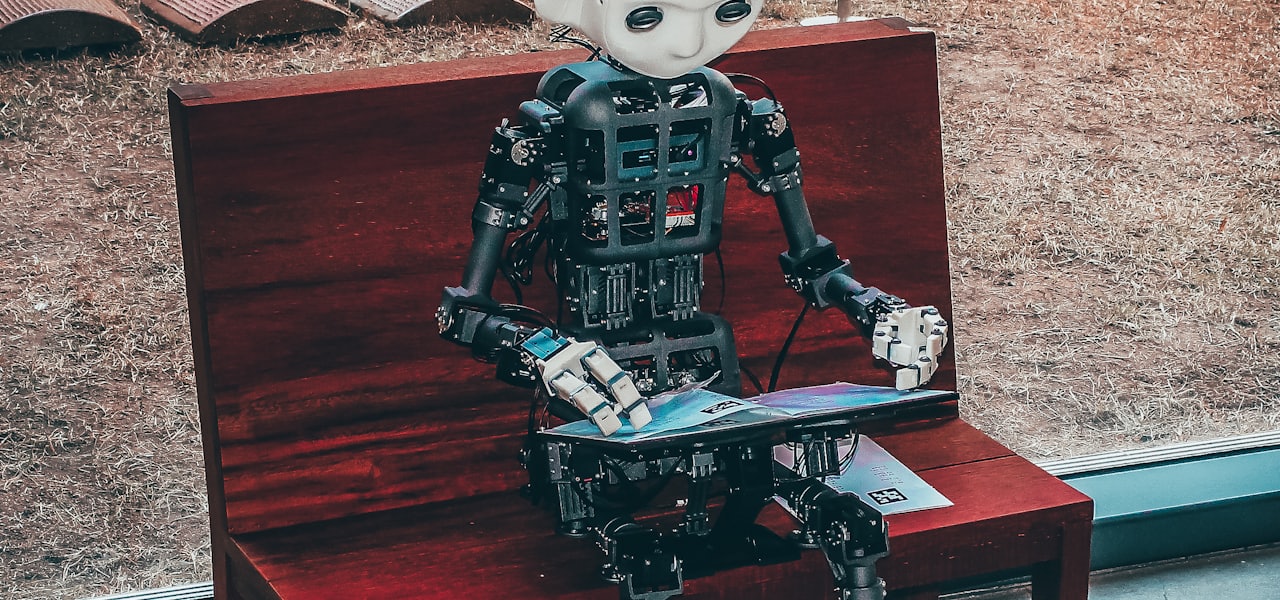
  • Artificial intelligence in education

    Artificial intelligence in education

    Artificial intelligence in education (often abbreviated as AIEd) is a subfield of educational technology that studies how to use artificial intelligence to create learning environments. Considerations in the field include data-driven decision-making, AI ethics, data privacy and AI literacy. Concerns include the potential for cheating, over-reliance, equity of access, reduced critical thinking, and the perpetuation of misinformation and bias. == History == Efforts to integrate AI into educational contexts have often followed technological advancement in the history of artificial intelligence. In the 1960s, educators and researchers began developing computer-based instruction systems, such as PLATO, developed by the University of Illinois. In the 1970s and 1980s, intelligent tutoring systems (ITS) were being adapted for classroom instruction. The International Artificial Intelligence in Education Society was founded in 1993. Coinciding with the AI boom of the 2020s, the use of large language models in the global north has been promoted and funded by venture capital and big tech. Companies creating AI services have targeted students and educational institutions as customers. Similarly, pre-AI boom educational companies have expanded their use of AI technologies. These commercial incentives for AIEd use may be related to a potential AI bubble. In the U.S., bipartisan support of AI development in K-12 education has been expressed, but specific implementations and best practices remain contentious. == Theory == AIEd applies theory from education studies, machine learning, and related fields. A 2019 review of the previous decade of studies found that most research prioritized technological design over pedagogical integration. Ouyang and Jiao (2021) propose three paradigms for AI in education, which follow roughly from least to most learner-centered and from requiring least to most technical complexity from the AI systems: AI-directed, learner-as-recipient: AIEd systems present a pre-set curriculum based on statistical patterns that do not adjust to learner's feedback. AI-supported, learner-as-collaborator: Systems that incorporate responsiveness to learner's feedback through, for example, natural language processing, wherein AI can support knowledge construction. AI-empowered, learner-as-leader: This model seeks to position AI as a supplement to human intelligence wherein learners take agency and AI provides consistent and actionable feedback. Some scholars place AI in education within a socio-technical framework. This positions AI alongside other emerging educational technologies, such as computing, the internet, and social media. The framework of Tsao, Heinrichs and Camit (2025) draws on new materialism and posthumanism, specifically Donna Haraway's concept of sympoiesis (making-with). This perspective views learning as an entanglement of human and non-human actors (students, teachers, and AI algorithms), where knowledge is co-composed in contact zones between human context and algorithmic prediction. AI agents have been trained on biased datasets, and thus continue to perpetuate societal biases. Since LLMs were created to produce human-like text, algorithmic bias can be introduced and reproduced. AI's data processing and monitoring reinforce neoliberal approaches to education rather than addressing inequalities. == Applications == Uses of generative AI chatbots in education have included assessment and feedback, machine translations, proof-reading exam question generation and copy editing, or as virtual assistants. Emotional AI in education is the study and development of systems that can detect learners' emotions or provide emotional support in learning. == Usage == === Schools and educators === Following the release of ChatGPT in November 2022, some schools and large school districts blocked access to the site and issued warnings that the use of such tools would be seen as cheating. Governmental and non-governmental organizations such as UNESCO, Article 4 of the European Union's AI Act, and the U.S. Department of Education have published reports advocating for specific AIEd approaches. National higher-education bodies have also published guidance on generative AI, including Ireland's Higher Education Authority, which issued a policy framework for higher education teaching and learning in December 2025. In 2024, UNESCO released updated global guidance for generative AI in education, emphasizing ethical use, teacher training, and data protection to ensure responsible integration of AI tools in learning environments. According to Taso (2025), policy implementation in higher education is interpreted and enacted differently by various organizations. These decentralized policies can lead to inconsistent enforcement and confusion among students regarding what constitutes acceptable use, with the burden of ethical navigation falling on individual teachers and students. AI integration in classrooms has created new forms of invisible labour for educators, who must navigate ambiguous policies, redesign assessments to be AI-resilient, and adjudicate potential academic integrity violations. The use of AI detection tools has also been criticised for creating an adversarial relationship between students and institutions, where students may be falsely accused of misconduct based on probabilistic software. AIEd advocates say that efforts should be made towards increasing global accessibility and training educators to serve underprivileged areas. === Students === Reliance on generative AI has been linked with reduced academic self-esteem and performance, and heightened learned helplessness. Algorithm errors and hallucinations are common flaws in AI agents, making them less trustworthy and reliable. According to a 2025 survey from Inside Higher Ed, 85% of higher education students use generative AI technology in some way, with 25% using AI to complete assignments for them. The most common reason cited for using AI to cheat was pressure to get high grades. 97% of students wanted some form of action from schools on the threat to academic integrity caused by AI, with the most popular options being clearer policies and more education about ethical uses of AI. In September 2025, The Atlantic published an op-ed from a high school senior arguing that the normalization of AI cheating was eroding critical thinking, academic integrity, creativity, and the shared student experience.

    Read more →
  • International Journal on Artificial Intelligence Tools

    International Journal on Artificial Intelligence Tools

    The International Journal on Artificial Intelligence Tools was founded in 1992 and is published by World Scientific. It covers research on artificial intelligence (AI) tools, including new architectures, languages and algorithms. Topics include AI in Bioinformatics, Cognitive Informatics, Knowledge-Based/Expert Systems and Object-Oriented Programming for AI. == Abstracting and indexing == The journal is abstracted and indexed in: Inspec Science Citation Index Expanded ISI Alerting Services CompuMath Citation Index Current Contents/Engineering, Computing, and Technology

    Read more →
  • Neuromorphic computing

    Neuromorphic computing

    Neuromorphic computing is a computing approach inspired by the human brain's structure and function. It uses artificial neurons to perform computations, mimicking neural systems for tasks such as perception, motor control, and multisensory integration. These systems, implemented in analog, digital, or mixed-mode VLSI, prioritize robustness, adaptability, and learning by emulating the brain’s distributed processing across small computing elements. This interdisciplinary field integrates biology, physics, mathematics, computer science, and electronic engineering to develop systems that emulate the brain’s morphology and computational strategies. Neuromorphic systems aim to enhance energy efficiency and computational power for applications including artificial intelligence, pattern recognition, and sensory processing. == History == Carver Mead proposed one of the first applications for neuromorphic engineering in the late 1980s. In 2006, researchers at Georgia Tech developed a field programmable neural array, a silicon-based chip modeling neuron channel-ion characteristics. In 2011, MIT researchers created a chip mimicking synaptic communication using 400 transistors and standard CMOS techniques. In 2012 HP Labs researchers reported that Mott memristors exhibit volatile behavior at low temperatures, enabling the creation of neuristors that mimic neuron behavior and support Turing machine components. Also in 2012, Purdue University researchers presented a neuromorphic chip design using lateral spin valves and memristors, noted for energy efficiency. The 2013 Blue Brain Project creates detailed digital models of rodent brains. Neurogrid, developed by Brains in Silicon at Stanford University, used 16 NeuroCore chips to emulate 65,536 neurons with high energy efficiency in 2014. The 2014 BRAIN Initiative and IBM’s TrueNorth chip contributed to neuromorphic advancements. The 2016 BrainScaleS project, a hybrid neuromorphic supercomputer at University of Heidelberg, operated 864 times faster than biological neurons. In 2017, Intel unveiled its Loihi chip, using an asynchronous artificial neural network for efficient learning and inference. Also in 2017 IMEC’s self-learning chip, based on OxRAM, demonstrated music composition by learning from minuets. In 2022, MIT researchers developed artificial synapses using protons for analog deep learning. In 2019, the European Union funded neuromorphic quantum computing to explore quantum operations using neuromorphic systems. Also in 2022, researchers at the Max Planck Institute for Polymer Research developed an organic artificial spiking neuron for in-situ neuromorphic sensing and biointerfacing. Researchers reported in 2024 that chemical systems in liquid solutions can detect sound at various wavelengths, offering potential for neuromorphic applications. == Neurological inspiration == Neuromorphic engineering emulates the brain’s structure and operations, focusing on the analog nature of biological computation and the role of neurons in cognition. The brain processes information via neurons using chemical signals, abstracted into mathematical functions. Neuromorphic systems distribute computation across small elements, similar to neurons, using methods guided by anatomical and functional neural maps from electron microscopy and neural connection studies. == Implementation == Neuromorphic systems employ hardware such as oxide-based memristors, spintronic memories, threshold switches, and transistors. Software implementations train spiking neural networks using error backpropagation. === Neuromemristive systems === Neuromemristive systems use memristors to implement neuroplasticity, focusing on abstract neural network models rather than detailed biological mimicry. These systems enable applications in speech recognition, face recognition, and object recognition, and can replace conventional digital logic gates. The Caravelli-Traversa-Di Ventra equation describes memristive memory evolution, revealing tunneling phenomena and Lyapunov functions. === Neuromorphic sensors === Neuromorphic principles extend to sensors, such as the retinomorphic sensor or event camera, which mimic human vision by registering brightness changes individually, optimizing power consumption. An example of this applied to detecting light is the retinomorphic sensor or, when employed in an array, an event camera. == Ethical considerations == Neuromorphic systems raise the same ethical questions as those for other approaches to artificial intelligence. Daniel Lim argued that advanced neuromorphic systems could lead to machine consciousness, raising concerns about whether civil rights and other protocols should be extended to them. Legal debates, such as in Acohs Pty Ltd v. Ucorp Pty Ltd, question ownership of work produced by neuromorphic systems, as non-human-generated outputs may not be copyrightable.

    Read more →
  • Knowledge processing for robots

    Knowledge processing for robots

    KnowRob (Knowledge processing for robots) is a system which combines knowledge representation and reasoning methods to acquire and ground knowledge. This system is the backbone of openEASE. both under developing at the Institute for Artificial Intelligence at the University of Bremen, Germany. == The framework == KnowRob can serve as a common sense framework for the integration of knowledge. This knowledge can be static encyclopedic knowledge, common sense knowledge, task descriptions, environment models, object information, observed actions, etc., which can come from different sources, like manually axiomatized, derived from observations, or imported from the web. KnowRob has been used by different research groups, as the Rice University using the ontological knowledge base in a robotic platform. As well by the Eindhoven University of Technology research group competing in the RoboCup league, in the "at Home" category, with the RoboEarth project. As well, KnowRob is mentioned in the work of some research groups from the Lucian Blaga University of Sibiu, Middle East Technical University in their combination of different knowledge bases, Keio University as related work because of the ontology service, University of Texas at Austin as related work as well because of the relation with the work presented, Hanyang University as related work as an OWL based knowledge processing framework. == Representations == To represent the knowledge, KnowRob uses the OWL ontology language and an extended first-order logic knowledge representation with computable predicates. To give the order of subactions, KnowRob includes a pair-wise ordering constrain, which gives a partial ordering. KnowRob adopts the closed-world assumption Prolog, and an open-world assumption by the use of computables. To include reasoning rules into Prolog, KnowRob uses an inference procedure beyond the capabilities of OWL to extract information about tasks executions. In its second version, KnowRob provides a logic interface to the hybrid reasoning kernel as a logic based language. This language presents the hybrid reasoning kernel as if everything were entities retrievable by providing partial descriptions for them. This entities descriptions include objects, their parts, and articulation models, environments composed of objects, software components, actions, and events. === Episodic memories === Episodic memory is related to the experience information, which is organized temporally and spatially, alongside combined with context information. In KnowRob, an episodic memory is understood as a recording that the agent makes of the ongoing activity, which includes very detailed information about the actions, motions, their purposes, effects and the behavior they generate, it also includes the images captured during execution, etc. == Usage == The knowledge is computed by external methods using Prolog queries. In the second version of the KnowRob system, is included a better structure of the packages and documentations. Which includes some extensions from the previous version, as well as a logic based language. For example, a cup description from perception can be represented in this language as: entity(Cup,[an, object, [type, cup], [shape, cylinder], [color, orange]]) As well, a controller could represent the same object as: entity(Cup, [an, object, [type, cup], [proper_physical_parts, [an, object, [type, handle], [grasp−pose, G−pose]]]]) The interface language is comparable to other query languages for symbolic knowledge bases. KnowRob's query language integrates reasoning methods, such as the simulation-based reasoning. == Goals == The goal of the KnowRob framework is to make semantic knowledge available for service robots. It is able to answer queries about missing information in vague instructions for tasks. This is possible with the actions hierarchical representation and information about objects which can be included in certain action.

    Read more →
  • Passenger drone

    Passenger drone

    A passenger drone is an autonomous aircraft that is designed to carry a small number of passengers to a destination. In 2021, Ehang, a technology company based in Guangzhou, China, developed the Ehang 184, the world's first passenger drone. == History == Unmanned aerial vehicles were first introduced in World War 1, when Britain first developed the Aerial Target, an aircraft controlled remotely through radio signals. A year later in the United States, testing of Kettering Bug, a 12-foot long biplane attached with a bomb and that launched via a “slingshot-like rail”, was also under progress. Both of their unreliable test results and their possibility of endangering friendly troops in deployment caused neither aircraft to be used during the war. Production of UAVs continued after World War I and into World War II and the Vietnam War, where they would be invaluable in assisting with training as well as reconnaissance. Late 20th century also saw the proposition and development of unique methods of travel, including personal jetpacks and even flying cars. While the previously mentioned are not drones, they serve as a precursor and foundation for the passenger drones of today. The first passenger drone was unveiled on January 6 of 2016 at the international Consumer Electronics Show (CES) in Las Vegas. Produced by Ehang, a Chinese company based in Guangzhou, the 184 was a one passenger drone equipped with four propellers that could fly for approximately 23 minutes at a top speed of 63 mph. Since then, many new companies have entered the market, but none yet have been accessible by the public. == Technological development == Since 2013, improvements in designs to wing structures have contributed to the economic feasibility of passenger drones. New structural advancements, such as the flapping-wing propulsion system based on the mechanisms of birds’ wings, are more available as they have proven their capabilities in laboratory testing. As of September 29th, 2015, most market-ready drones are delivery drones with a carrying capacity limited to small packages - with a typical max capacity of under 5 pounds. However, while the technology exists for drones with larger carrying capacities, specifically those capable of carrying multiple humans, the execution of this technology is not yet market accessible. This capacity limit must be addressed for passenger drones; given current designs strive to carry a maximum of 5 people. However, some estimates believe that passengers drones could become a reality, specifically for paid transportation and emergency purposes, as early as 2026. With implementation of this technology, there could be significant effects on ground traffic including reducing gridlock in heavily congested areas and conserving up to 15% of the fuel currently used in heavy traffic patterns. However, extensive growth of the passenger drone market also risks clouding the low-altitude airspace and causing new safety risks. However, this concern is being addressed by recent advancements in the Internet of Drones (IoD) which links drones together to ensure appropriate pathing and reduce mid-air collisions. While this brings additional security issues, including maintaining reliable communication channels in the case of technological failure, researchers hope that this will help reduce crashes that can result in damage to passengers, buildings, and people in and around the airspace. == Notable companies == Ehang is a Chinese company that has developed numerous drones including passenger plane Ehang 184. EHang 184 was their first model, developed as an eight dual rotor wing blade drone that can carry two passengers. The model was retired in 2020 and is replaced by the Ehang 216. Ehang also released a one passenger drone, Ehang 116. Ehang in 2021 unveiled the model VT-30. VT-30 is designed to have eight dual rotor wing blades to complement its fixed wing platform. Flyastro, a Texas-based drone company, developed the Astro ALTA, with two and four person passenger models. The company is known for being the first to develop a solar-powered airplane. The development team initially began with the model, Elroy. It was a two passenger drone with similar design to the ALTA. Once flight was achieved, the model Astro ALTA began development. Joby Aviation is a California based company that has developed a five passenger drone, with one seat for the pilot. The company expects to complete its FAA certification process 2022. Joby in 2020 acquired a 75 million dollar investment from service provider Uber Technologies Inc., leading to Uber Elevate and Expands partnership. Archer Aviation is a California-based company that has developed a two passenger model called Maker. It has fixed wings with twelve rotor wings. Archer is developing five person model. United Airlines has partnered with Archer for commercial sale of the model, Maker. Maker is expected to be released within Los Angeles and Miami by 2024. CityAirbus is a drone project developed by Airbus, a European multinational aerospace company, based in the Netherlands. CityAirbus has developed a four- person passenger drone with fixed wings that include rotor wing blades. Its expected certification for public flight is in 2025. Boeing, an American multinational aviation corporation is developing a passenger drone model called the Passenger Air Vehicle (PAV). The model is a fixed wing with eight rotor blade wings attached onto a platform underneath the base structure. This model can hold two passengers and still is in development. Volocopter is a German aircraft manufacturer that is developing a passenger drone called Volocity. The model consist of eighteen rotor wings above the cockpit on a circular ring. Japan Airlines, an investor of Volocopter plans to have public test in Japan as early as 2023. == Future use == === Potential benefits === Passenger drones can greatly reduce the time for travel. As passenger drones flight paths are not restricted by conventional roads, the travel distance is shortened. Current ventures such as Joby Aviation, after acquiring Uber Air, plan to take advantage of this technology in the form of air taxis. Other potential benefits include the use of passenger drones by emergency services such as search and rescue missions and the delivery of life saving goods. Companies like Ehang have already begun using passenger drones as emergency vehicles as a response to the potential river collapses during the flood season in China. === Concerns === Passenger and air traffic safety remains at the forefront of concerns. Regulations for air traffic centered around passenger drones are still underway and would continue to develop with increasing use cases for passenger drones. Remote security threats on commercial drones such as Man-In-The-Middle (MITM) attack have also exposed the vulnerabilities in current drone systems. Among American adults, 54 percent say that they would feel unsafe flying inside a passenger drone. Passenger drones can be very noisy; a single passenger drone such as Joby Aviation’s all-electric vertical take-off and landing (“eVTOL”) aircraft has an estimated noise production of 70 decibels (dB), a noise level equating to “loud traffic”.

    Read more →
  • Kinect

    Kinect

    Kinect is a discontinued line of motion sensing input devices produced by Microsoft and first released in 2010. The devices generally contain RGB cameras, and infrared projectors and detectors that map depth through either structured light or time of flight calculations, which can in turn be used to perform real-time gesture recognition and body skeletal detection, among other capabilities. They also contain microphones that can be used for speech recognition and voice control. Kinect was originally developed as a motion controller peripheral for Xbox video game consoles, distinguished from competitors (such as Nintendo's Wii Remote and Sony's PlayStation Move) by not requiring physical controllers. The first-generation Kinect was based on technology from Israeli company PrimeSense, and unveiled at E3 2009 as a peripheral for Xbox 360 codenamed "Project Natal". It was first released on November 4, 2010, and would go on to sell eight million units in its first 60 days of availability. The majority of the games developed for Kinect were casual, family-oriented titles, which helped to attract new audiences to Xbox 360, but did not result in wide adoption by the console's existing, overall userbase. As part of the 2013 unveiling of Xbox 360's successor, Xbox One, Microsoft unveiled a second-generation version of Kinect with improved tracking capabilities. Microsoft also announced that Kinect would be a required component of the console, and that it would not function unless the peripheral is connected. The requirement proved controversial among users and critics due to privacy concerns, prompting Microsoft to backtrack on the decision. However, Microsoft still bundled the new Kinect with Xbox One consoles upon their launch in November 2013. A market for Kinect-based games still did not emerge after the Xbox One's launch; Microsoft would later offer Xbox One hardware bundles without Kinect included, and later revisions of the console removed the dedicated ports used to connect it (requiring a powered USB adapter instead). Microsoft ended production of Kinect for Xbox One in October 2017. Kinect has also been used as part of non-game applications in academic and commercial environments, as it was cheaper and more robust than other depth-sensing technologies at the time. While Microsoft initially objected to such applications, it later released software development kits (SDKs) for the development of Microsoft Windows applications that use Kinect. In 2020, Microsoft released Azure Kinect as a continuation of the technology integrated with the Microsoft Azure cloud computing platform. Part of the Kinect technology was also used within Microsoft's HoloLens project. Microsoft discontinued the Azure Kinect developer kits in October 2023. == History == === Development === The origins of the Kinect started around 2005, at a point where technology vendors were starting to develop depth-sensing cameras. Microsoft had been interested in a 3D camera for the Xbox line earlier but because the technology had not been refined, had placed it in the "Boneyard", a collection of possible technology they could not immediately work on. In 2005, Israeli company PrimeSense was founded by mathematicians and engineers to develop the "next big thing" for video games, incorporating cameras that were capable of mapping a human body in front of them and sensing hand motions. They showed off their system at the 2006 Game Developers Conference, where Microsoft's Alex Kipman, the general manager of hardware incubation, saw the potential in PrimeSense's technology for the Xbox system. Microsoft began discussions with PrimeSense about what would need to be done to make their product more consumer-friendly: not only improvements in the capabilities of depth-sensing cameras, but a reduction in size and cost, and a means to manufacture the units at scale was required. PrimeSense spent the next few years working at these improvements. Nintendo released the Wii in November 2006. The Wii's central feature was the Wii Remote, a handheld device that was detected by the Wii through a motion sensor bar mounted onto a television screen to enable motion controlled games. Microsoft felt pressure from the Wii, and began looking into depth-sensing in more detail with PrimeSense's hardware, but could not get to the level of motion tracking they desired. While they could determine hand gestures, and sense the general shape of a body, they could not do skeletal tracking. A separate path within Microsoft looked to create an equivalent of the Wii Remote, considering that this type of unit may become standardized similar to how two-thumbstick controllers became a standard feature. However, it was still ultimately Microsoft's goal to remove any device between the player and the Xbox. Kudo Tsunoda and Darren Bennett joined Microsoft in 2008, and began working with Kipman on a new approach to depth-sensing aided by machine learning to improve skeletal tracking. They internally demonstrated this and established where they believed the technology could be in a few years, which led to the strong interest to fund further development of the technology; this has also occurred at a time that Microsoft executives wanted to abandon the Wii-like motion tracking approach, and favored the depth-sensing solution to present a product that went beyond the Wii's capabilities. The project was greenlit by late 2008 with work started in 2009. The project was codenamed "Project Natal" after the Brazilian city Natal, Kipman's birthplace. Additionally, Kipman recognized the Latin origins of the word "natal" to mean "to be born", reflecting the new types of audiences they hoped to draw with the technology. Much of the initial work was related to ethnographic research to see how video game players' home environments were laid out, lit, and how those with Wiis used the system to plan how Kinect units would be used. The Microsoft team discovered from this research that the up-and-down angle of the depth-sensing camera would either need to be adjusted manually, or would require an expensive motor to move automatically. Upper management at Microsoft opted to include the motor despite the increased cost to avoid breaking game immersion. Kinect project work also involved packaging the system for mass production and optimizing its performance. Hardware development took around 22 months. During hardware development, Microsoft engaged with software developers to use Kinect. Microsoft wanted to make games that would be playable by families since Kinect could sense multiple bodies in front of it. One of the first internal titles developed for the device was the pack-in game Kinect Adventures developed by Good Science Studio that was part of Microsoft Studios. One of the game modes of Kinect Adventures was "Reflex Ridge", based on the Japanese Brain Wall game where players attempt to contort their bodies in a short time to match cutouts of a wall moving at them. This type of game was a key example of the type of interactivity they wanted with Kinect, and its development helped feed into the hardware improvements. Another development was Project Milo, a prototype game developed by Lionhead Studios led by Peter Molyneux where the player could interact with a virtual avatar through motion controls and voice recognition. Lionhead had developed the project based on original capabilities of the Kinect, but according to Molyneux, Microsoft had found that a consumer-grade version of the Kinect would cost thousands of dollars, so they scaled back the device and refocused the role of games for the Kinect to be more casual games as seen on the Wii. As a result, Project Milo no longer fit Microsoft's portfolio and was cancelled. Nearing the planned release, there was a problem of widespread testing of Kinect in various room types and different bodies accounting for age, gender, and race among other factors, while keeping the details of the unit confidential. Microsoft engaged in a company-wide program offering employees to take home Kinect units to test them. Microsoft also brought other non-gaming divisions, including its Microsoft Research, Microsoft Windows, and Bing teams to help complete the system. Microsoft established its own large-scale manufacturing facility to bulk product Kinect units and test them. === Introduction === Kinect was first announced to the public as "Project Natal" on June 1, 2009, during Microsoft's press conference at E3 2009; film director Steven Spielberg joined Microsoft's Don Mattrick to introduce the technology and its potential. Three demos were presented during the conference—Microsoft's Ricochet and Paint Party, and Lionhead Studios' Milo & Kate created by Peter Molyneux—while a Project Natal-enabled version of Criterion Games' Burnout Paradise was shown during the E3 exhibition. By E3 2009, the skeletal mapping technology was capable of simultaneously tracking four people, with a feature extraction of 4

    Read more →
  • OntoCAPE

    OntoCAPE

    OntoCAPE is a large-scale ontology for the domain of Computer-Aided Process Engineering (CAPE). It can be downloaded free of charge via the OntoCAPE Homepage. OntoCAPE is partitioned into 62 sub-ontologies, which can be used individually or as an integrated suite. The sub-ontologies are organized across different abstraction layers, which separate general knowledge from knowledge about particular domains and applications. The upper layers have the character of an upper ontology, covering general topics such as mereotopology, systems theory, quantities and units. The lower layers conceptualize the domain of chemical process engineering, covering domain-specific topics such as materials, chemical reactions, or unit operations.

    Read more →
  • Early-exit network

    Early-exit network

    Early-exit networks are a class of dynamic neural networks designed for efficient inference by allowing models to make confident predictions at intermediate layers, rather than processing the full network. Early-exit mechanisms are methods for deep neural networks that add intermediate classifiers, allowing inference to stop at earlier layers for inputs assessed as low uncertainty. Decisions to exit are typically based on confidence measures such as softmax-derived scores, classification margins, or entropy-based criteria, with the goal of reducing computational cost. These approaches are commonly paired with specialized training procedures and system-level optimizations to improve efficiency while preserving accuracy. The main idea behind the technology is to stop excessive calculations when a good answer can already be given with a high degree of probability, which can save both computation and time. Early-exit networks have also been extended with expert-based exit criteria, where intermediate classifiers are treated as multiple “experts” whose predictions and confidence scores can be aggregated to decide whether to stop computation early. Hardware implementations are also being developed.

    Read more →
  • Misskey

    Misskey

    Misskey (Japanese: ミスキー, romanized: Misukī) is an open source, federated, social networking service created in 2014 by Japanese software engineer Eiji "syuilo" Shinoda. Misskey uses the ActivityPub protocol for federation, allowing users to interact between independent Misskey instances, and other ActivityPub compatible platforms. Misskey is generally considered to be part of the Fediverse. Despite being a decentralized service, Misskey is not philosophically opposed to centralization. The name Misskey comes from the lyrics of Brain Diver, a song by the Japanese singer May'n. == History == Misskey was initially developed as a BBS-style internet forum by high school student Eiji Shinoda in 2014. After introducing a timeline feature, Misskey gained popularity as the microblogging platform it is today. In 2018, Misskey added support for ActivityPub, becoming a federated social media platform. The flagship Misskey server, Misskey.io, was started on April 15, 2019. Misskey, alongside Mastodon and Bluesky, has received attention as a potential replacement for Twitter following Twitter's acquisition by Elon Musk in 2022. On April 8, 2023, Misskey.io incorporated as MisskeyHQ K.K. As of February 2024, over 450,000 users were registered, making it the largest instance of Misskey. Misskey.io is crowdfunded. The administrator of Misskey.io is Japanese system administrator Yoshiki Eto, who operates under the alias Murakami-san. Eiji Shinoda serves as director. In July 2023, Twitter introduced extreme restrictions on their API in order to combat scraping from bots. Some users were critical of the changes, and as a result migrated to other social networks. The number of users registering on Misskey.io, Misskey's official instance and the largest one, increased rapidly, with other Misskey instances also receiving a spike in signups. In response to this trend, Skeb, a platform for sharing art, announced on July 14, 2023 that it would sponsor the Misskey development team. In early 2024, Misskey was targeted by a spam attack from Japan. The cause of the attack is believed to be a dispute between rival groups on a Japanese hacker forum and a DDoS attack on a Discord bot. Mastodon instances with open registration were used in the attack. In November 2025, Eto announced intentions to replace ActivityPub with Misskey's own low-overhead federation system in "a few years". Shinoda later said that this was "fake news". == Development == Misskey is open source software and is licensed under the AGPLv3. The Misskey API is publicly available and is documented using the OpenAPI Specification, which allows users to build automated accounts and use it on any Misskey instance. The service is translated using Crowdin. Misskey is developed using Node.js. TypeScript is used on both the frontend and backend. PostgreSQL is used as its database. Vue.js is used for the frontend. == Functionality == Posts on Misskey are called "notes". Notes are limited to a maximum of 3,000 characters (a limit which can be customized by instances), and can be accompanied by any file, including polls, images, videos, and audio. Notes can be reposted, either by themselves or with another "quote" note. Misskey comes with multiple timelines to sort through the notes that an instance has available, and are displayed in reverse chronological order. The Home timeline shows notes from users that you follow, the Local timeline shows all notes from the instance in use, the Social timeline shows both the Home and Local timeline, and the Global timeline shows every public note that the instance knows about. Notes have customizable privacy settings to control what users can see a note, similar to Mastodon's post visibility ranges. Public notes show up on all timelines, while Home notes only show on a user's Home timeline. Notes can also be set to be available only for followers. Direct messages using notes can be sent to users.

    Read more →
  • Karen Hao

    Karen Hao

    Karen Hao (born in the United States c. 1993) is an American journalist and author. Currently a freelancer for publications like The Atlantic and previously a foreign correspondent based in Hong Kong for The Wall Street Journal and senior artificial intelligence editor at the MIT Technology Review, she is best known for her coverage on AI research, technology ethics and the social impact of AI. Hao also co-produced the podcast In Machines We Trust and wrote the newsletter The Algorithm. Previously, she worked at Quartz as a tech reporter and data scientist and was an application engineer at the first startup to spin out of X Development. Hao's writing has also appeared in Mother Jones, Sierra Magazine, The New Republic, and other publications. == Early life and education == Hao is the daughter of Chinese immigrant parents, and grew up in New Jersey. She is a native speaker of both English and Mandarin Chinese. She graduated from The Lawrenceville School in 2011. She then studied at the Massachusetts Institute of Technology (MIT), graduating with a B.S. in mechanical engineering and a minor in energy studies in 2015. == Career == Hao is known in the technology world for her coverage of new AI research findings and their societal and ethical impacts. Her writing has spanned research and issues regarding big tech data privacy, misinformation, deepfakes, facial recognition, and AI healthcare tools. In March 2021, Hao published a piece that uncovered previously unknown information about how attempts to combat misinformation by different teams at Facebook using machine learning were impeded and constantly at odds with Facebook's drive to grow user engagement. Upon its release, leaders at Facebook including Mike Schroepfer and Yann LeCun immediately criticized the piece through Twitter responses. AI researchers and AI ethics experts Timnit Gebru and Margaret Mitchell responded in support of Hao's writing and advocated for more change and improvement for all. Hao also co-produced the podcast In Machines We Trust, which discusses the rise of AI with people developing, researching, and using AI technologies. The podcast won the 2020 Front Page Award in investigative reporting. Hao has occasionally created data visualizations that have been featured in her work at the MIT Technology Review and elsewhere. In 2018, her "What is AI?" flowchart visualization was exhibited as an installation at the Museum of Applied Arts in Vienna. She has been an invited speaker at TEDxGateway, the United Nations Foundation, EmTech, WNPR, and many other conferences and podcasts. Her TEDx talk discussed the importance of democratizing how AI is built. In March 2022, she was hired by The Wall Street Journal to cover China technology and society, while being based in Hong Kong. She left the WSJ in 2023. In May 2025, Hao released the book Empire of AI: Dreams and Nightmares in Sam Altman's OpenAI. The book became a New York Times Bestseller and was named a Book of the Year by the Financial Times. In December 2025, after criticism from readers, Hao issued a correction to her book where she had previously overestimated the water consumption of a data center in Chile compared to the community's water consumption by factor of 1,000, due to an error in a government document. In April 2026 the book won the New York Public Library's Helen Bernstein Book Award for Excellence in Journalism. === Selected awards and honors === 2019 Webby Award nominee for best newsletter, as a writer of The Algorithm 2021 Front Page Award in investigative reporting, as a co-producer for In Machines We Trust 2021 Ambies Award nominee for best knowledge and science podcast, as a co-producer for In Machines We Trust 2021 Webby Award nominee for best technology podcast, as a co-producer for In Machines We Trust 2024 American Humanist Media Award 2025 TIME100 AI, named by TIME magazine as one of the 100 most influential people in artificial intelligence 2026 New York Public Library's Helen Bernstein Book Award for Excellence in Journalism 2026 Whiting Award in Non-fiction

    Read more →
  • Connectionism

    Connectionism

    Connectionism is an approach to the study of human mental processes and cognition that utilizes mathematical models known as connectionist networks or artificial neural networks. Connectionism has had many "waves" since its beginnings. The first wave appeared 1943 with Warren Sturgis McCulloch and Walter Pitts both focusing on comprehending neural circuitry through a formal and mathematical approach, and Frank Rosenblatt who published the 1958 paper "The Perceptron: A Probabilistic Model For Information Storage and Organization in the Brain" in Psychological Review, while working at the Cornell Aeronautical Laboratory. The first wave ended with the 1969 book Perceptrons about limitations of the original perceptron idea, written by Marvin Minsky and Seymour Papert, which contributed to discouraging major funding agencies in the US from investing in connectionist research. With a few noteworthy deviations, most connectionist research entered a period of inactivity until the mid-1980s. The term connectionist model was reintroduced in a 1982 paper in the journal Cognitive Science by Jerome Feldman and Dana Ballard. The second wave blossomed in the late 1980s, following a 1987 book Parallel Distributed Processing by James L. McClelland, David E. Rumelhart, et al., which introduced a couple of improvements to the simple perceptron idea, such as intermediate processors (now known as "hidden layers") alongside input and output units, and used a sigmoid activation function instead of the old "all-or-nothing" function. Their work built upon that of John Hopfield, who was a key figure investigating the mathematical characteristics of sigmoid activation functions. From the late 1980s to the mid-1990s, connectionism took on an almost revolutionary tone when Schneider, Terence Horgan and Tienson posed the question of whether connectionism represented a fundamental shift in psychology and so-called "good old-fashioned AI", or GOFAI. Some advantages of the second wave connectionist approach included its applicability to a broad array of functions, structural approximation to biological neurons, low requirements for innate structure, and capacity for graceful degradation. Its disadvantages included the difficulty in deciphering how ANNs process information or account for the compositionality of mental representations, and a resultant difficulty explaining phenomena at a higher level. The current (third) wave has been marked by advances in deep learning, which have made possible the creation of large language models. The success of deep-learning networks in the past decade has greatly increased the popularity of this approach, but the complexity and scale of such networks has brought with them increased interpretability problems. == Basic principle == The central connectionist principle is that mental phenomena can be described by interconnected networks of simple and often uniform units. The form of the connections and the units can vary from model to model. For example, units in the network could represent neurons and the connections could represent synapses, as in the human brain. This principle has been seen as an alternative to GOFAI and the classical theories of mind based on symbolic computation, but the extent to which the two approaches are compatible has been the subject of much debate since their inception. === Activation function === Internal states of any network change over time due to neurons sending a signal to a succeeding layer of neurons in the case of a feedforward network, or to a previous layer in the case of a recurrent network. Discovery of non-linear activation functions has enabled the second wave of connectionism. === Memory and learning === Neural networks follow two basic principles: Any mental state can be described as a n-dimensional vector of numeric activation values over neural units in a network. Memory and learning are created by modifying the 'weights' of the connections between neural units, generally represented as an n×m matrix. The weights are adjusted according to some learning rule or algorithm, such as Hebbian learning. Most of the variety among the models comes from: Interpretation of units: Units can be interpreted as neurons or groups of neurons. Definition of activation: Activation can be defined in a variety of ways. For example, in a Boltzmann machine, the activation is interpreted as the probability of generating an action potential spike, and is determined via a logistic function on the sum of the inputs to a unit. Learning algorithm: Different networks modify their connections differently. In general, any mathematically defined change in connection weights over time is referred to as the "learning algorithm". === Biological realism === Connectionist work in general does not need to be biologically realistic. One area where connectionist models are thought to be biologically implausible is with respect to error-propagation networks that are needed to support learning, but error propagation can explain some of the biologically-generated electrical activity seen at the scalp in event-related potentials such as the N400 and P600, and this provides some biological support for one of the key assumptions of connectionist learning procedures. Many recurrent connectionist models also incorporate dynamical systems theory. Many researchers, such as the connectionist Paul Smolensky, have argued that connectionist models will evolve toward fully continuous, high-dimensional, non-linear, dynamic systems approaches. == Precursors == Precursors of the connectionist principles can be traced to early work in psychology, such as that of William James. Psychological theories based on knowledge about the human brain were fashionable in the late 19th century. As early as 1869, the neurologist John Hughlings Jackson argued for multi-level, distributed systems. Following from this lead, Herbert Spencer's Principles of Psychology, 3rd edition (1872), and Sigmund Freud's Project for a Scientific Psychology (composed 1895) propounded connectionist or proto-connectionist theories. These tended to be speculative theories. But by the early 20th century, Edward Thorndike was writing about human learning that posited a connectionist type network. Hopfield networks had precursors in the Ising model due to Wilhelm Lenz (1920) and Ernst Ising (1925), though the Ising model conceived by them did not involve time. Monte Carlo simulations of Ising model required the advent of computers in the 1950s. == The first wave == The first wave begun in 1943 with Warren Sturgis McCulloch and Walter Pitts both focusing on comprehending neural circuitry through a formal and mathematical approach. McCulloch and Pitts showed how neural systems could implement first-order logic: Their classic paper "A Logical Calculus of Ideas Immanent in Nervous Activity" (1943) is important in this development here. They were influenced by the work of Nicolas Rashevsky in the 1930s and symbolic logic in the style of Principia Mathematica. Hebb contributed greatly to speculations about neural functioning, and proposed a learning principle, Hebbian learning. Lashley argued for distributed representations as a result of his failure to find anything like a localized engram in years of lesion experiments. Friedrich Hayek independently conceived the model, first in a brief unpublished manuscript in 1920, then expanded into a book in 1952. The Perceptron machines were proposed and built by Frank Rosenblatt, who published the 1958 paper “The Perceptron: A Probabilistic Model For Information Storage and Organization in the Brain” in Psychological Review, while working at the Cornell Aeronautical Laboratory. He cited Hebb, Hayek, Uttley, and Ashby as main influences. Another form of connectionist model was the relational network framework developed by the linguist Sydney Lamb in the 1960s. The research group led by Widrow empirically searched for methods to train two-layered ADALINE networks (MADALINE), with limited success. A method to train multilayered perceptrons with arbitrary levels of trainable weights was published by Alexey Grigorevich Ivakhnenko and Valentin Lapa in 1965, called the Group Method of Data Handling. This method employs incremental layer by layer training based on regression analysis, where useless units in hidden layers are pruned with the help of a validation set. The first multilayered perceptrons trained by stochastic gradient descent was published in 1967 by Shun'ichi Amari. In computer experiments conducted by Amari's student Saito, a five layer MLP with two modifiable layers learned useful internal representations to classify non-linearily separable pattern classes. In 1972, Shun'ichi Amari produced an early example of self-organizing network. == The neural network winter == There was some conflict among artificial intelligence researchers as to what neural networks are useful for. Around late 1960s, there was a widespread lull in research a

    Read more →